
This is not the best time to be in the restaurant business. In fact, recent industry data reveal that a staggering number of restaurants are operating without any profit due to rising operating costs.
“Last year, 42 percent of operators reported their restaurant was not profitable – highlighting the need for operational innovation, workforce investment, and smart policy solutions,” reads the National Restaurant Association’s February report.
Consumer Price Index data from March show that over the last 12 months, food at home prices went up 1.9%, while food away from home rose 3.8%, forcing many diners to reconsider restaurant meals.
One category is struggling more than most: seafood. Restaurants specializing in seafood delicacies are more vulnerable to current economic pressures due to the higher base cost of raw product.
In 2025, seafood prices rose 2.1% to $10.52 per pound on average, according to Seafood Source. Other meat prices actually saw higher inflation that year, with beef soaring 7.5% and chicken rising 3.3%, yet seafood’s price perception was higher among cash-strapped consumers.
The toll of rising operating and input costs in the seafood restaurant industry has forced another chain to close two more locations and exit a key market.
Mambo Seafood quietly closes 2 San Antonio restaurants, exiting market
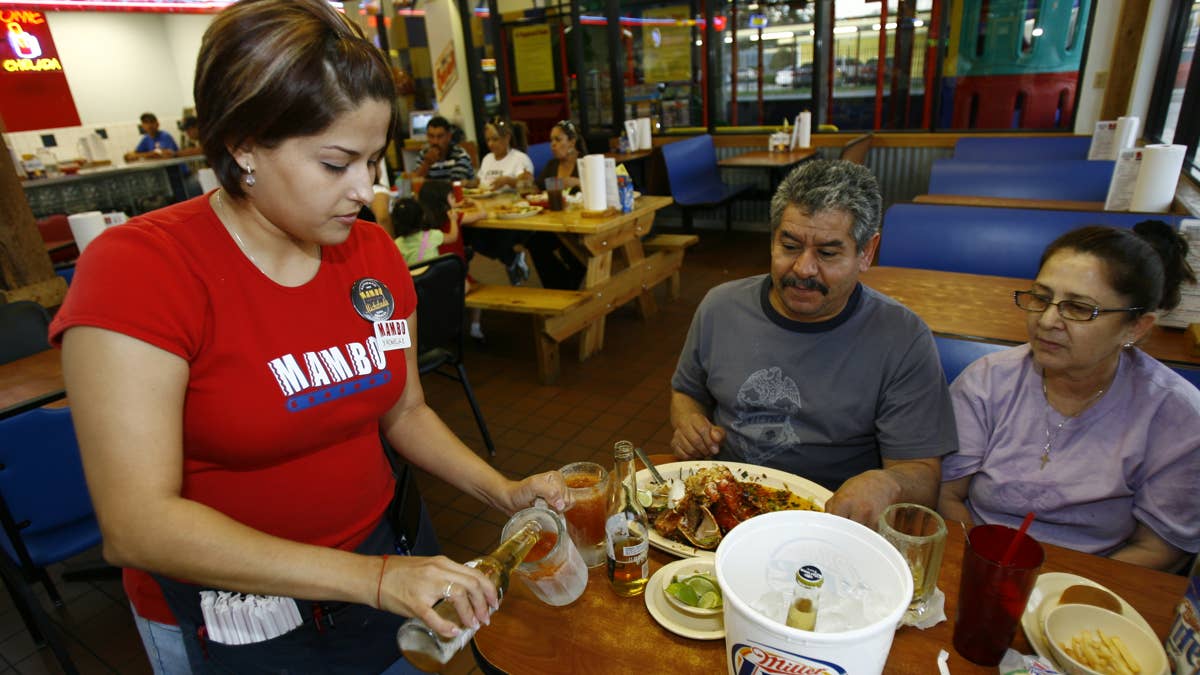
A Texas restaurant chain specializing in Latin-inspired American seafood, Mambo Seafood, has exited the San Antonio market after the recent closure of two locations, reported KSAT.
While Mambo Seafood still operates more than a dozen other restaurants in its home market, Houston, and South Texas, its presence in San Antonio didn’t last long. The chain entered the market in 2023.
About a year ago, it shuttered its Joint Base San Antonio-Lackland store and subsequently closed its location within the Las Palmas shopping center six months after opening, according to an Express-News report.
More recently Mambo Seafood quietly closed its last two remaining locations in San Antonio.
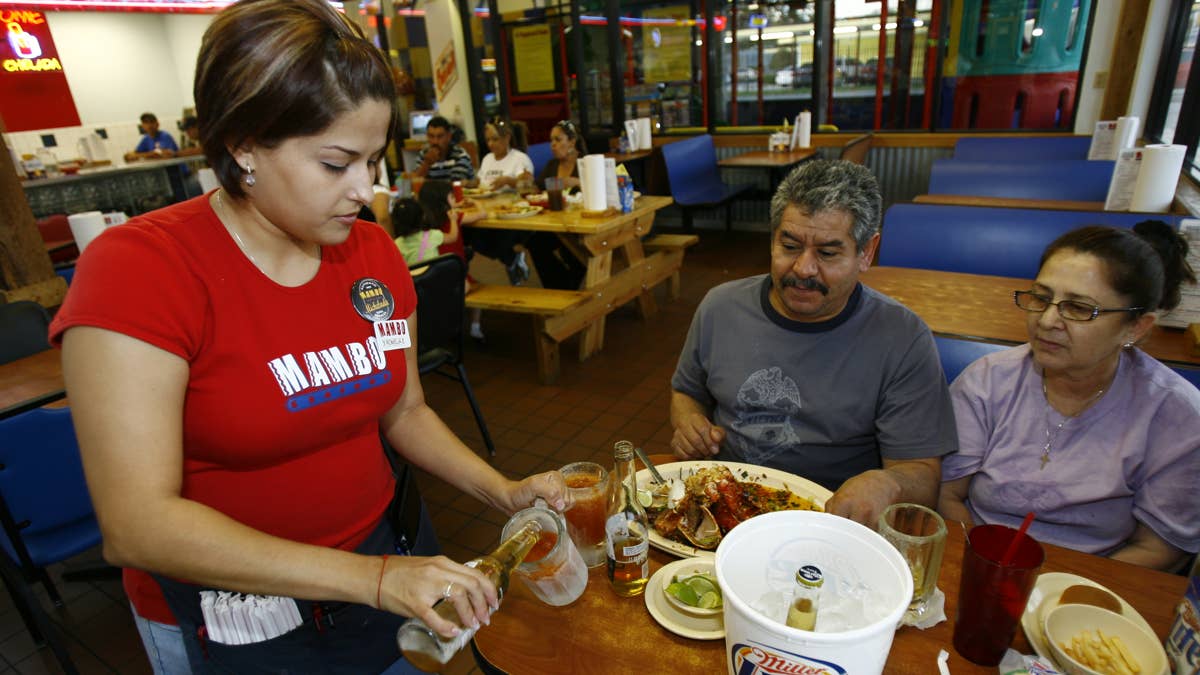
Photo by Houston Chronicle/Hearst Newspapers on Getty Images
Two San Antonio restaurants now closed:
- Mambo Seafood at 4711 NW Loop 410 near Medical Center
- Mambo Seafood at 3242 Goliad Road at Brooks
Source: San Antonio Current
The Business Journal’s phone calls to the affected San Antonio outposts were greeted by an automated message notifying callers of the permanent closures.
“Thank you for calling Mambo Seafood. This location is now closed. We look forward to continuing to serve our guests in Houston, and hope to welcome you at one of our locations there in the future,” the message said. Another inquiry was sent to Mambo via email, but no response was received before publication.
The chain still has 14 locations throughout Texas, including in Houston and McAllen.
Mambo Seafood’s famous rice and micheladas
Mambo Seafood was established in 1996 in Houston and quickly gained popularity for its vibrant atmosphere and fusion of Latin and Gulf Coast seafood flavors.
Michael Ho, part of the family that established the legendary Connie’s Seafood in Houston, also founded Mambo Seafood. Mambo’s menu includes meals inspired by Connie’s.
“For example, Mambo Seafood’s mambo rice is essentially the fried rice you’ll find at Connie’s. But the real draw of Mambo, at least on the Friday night I find the only vacant bar seat, is that everyone is laughing and gulping down Michelob Ultras and micheladas,” writes Chron.
The Mambo concept was designed to appeal to a wider audience. What started as a local neighborhood spot has grown into a multi-market brand with 16+ locations across Texas. In recent years, it partnered with Authentic Restaurant Brands to expand its footprint while maintaining its authentic culture.
Mambo Seafood is most famous for its mambo rice, a signature seafood fried rice that has become a cult favorite, as well as its homemade michelada and ice-cold cheladas.
“The fish was alright but their mambo rice was straight up the best rice ever. Not even joking you would never find a better fried rice not even from a Chinese restaurant,” wrote Facebook user El Chacal, commenting on the post that shared news about the closures.
Why Mambo Seafood exited a key market
While Mambo Seafood hasn’t released an official statement regarding the most recent closures, the decision to abandon a market with San Antonio’s robust hospitality growth suggests the chain may be grappling with the same margin pressures currently squeezing the broader industry.
San Antonio is the second-most-populated city in Texas and the seventh-largest city in the United States, with 1.48 million residents, according to February data from Texas Demographics.
Previous coverage byNina Zdinjak on restaurants:
- McDonald’s has a new warning for all of its customers
- Papa Johns sees three alarming shifts in customer behavior
- Panera Bread makes major menu changes to win back customers
Large metropolitan areas like San Antonio are vital for all kinds of restaurants because densely populated areas provide more foot traffic safety.
“The higher the foot traffic in an area, the greater the opportunity for a restaurant to attract customers and increase sales,” wrote Bvarta Location Intelligence for Restaurant Expansion in November 2025.
In addition to its population, San Antonio’s hospitality industry has been growing since the Covid pandemic, with its 2024 impact amounting to $23.4 billion, the highest ever and 34% above the pre-pandemic peak in 2019, according to Trinity University’s San Antonio Hospitality Industry 2024 Report.
“The Restaurants and Catering sector made the largest contribution to the local economy in 2024, accounting for 49% of the industry’s total economic impact,” reveals the report.
While San Antonio is one of the key markets in Texas for restaurant operators, the overall state of the industry in The Lone Star State has been under the same pressure as other food establishments around the country.
In 2025, the Texas Restaurant Association sounded the alarm on the state of the foodservice industry in a Q3 economics report. The Association highlighted that 88% of Texas restaurants confirmed higher food costs, 66% reported rising labor expenses, and 52% saw traffic declines.
Restaurants have seen a noticeable slowdown in restaurant traffic at the same time operators are facing higher costs and little room to absorb more losses, Texas Restaurant Association CEO Emily Williams Knight recently said, according to Texas Public Radio.
When a restaurant leaves such an important market, it often suggests that the internal costs may be too big to stay afloat. Though Mambo Seafood didn’t disclose reasons for the closures, its San Antonio exit confirms broader industry struggles and shifts in consumer behavior.
Other seafood chains haven’t been immune to these pressures, either.
Recent seafood chain closures and bankruptcies:
- Red Lobster: Filed for Chapter 11 bankruptcy in May 2024 and closed more than 100 locations; despite emerging under new ownership, it continues to shutter underperforming sites as of 2026 to cut high rent costs, according to TheStreet’s Fernanda Tronco.
- Joe’s Crab Shack: The chain has shrunk to approximately 15 locations nationwide after significant sales drops and rising shellfish costs led to quiet closures throughout 2024 and 2025, TheStreet indicated.
- Rubio’s Coastal Grill: Filed for Chapter 11 bankruptcy in June 2024 and abruptly shuttered 48 locations in California and Nevada due to rising labor costs, leaving only a fraction of its footprint remaining, based on reporting by TheStreet.
- Arthur Treacher’s Fish & Chips: This legacy brand has effectively disappeared as a standalone chain, with only three traditional locations left in Ohio as of 2025, reported TheStreet’s Daniel Kline.
Related: Burger King’s menu adds wild new take on the classic burger
#Cultfavorite #seafood #restaurant #chain #exits #entire #market