
This isn’t what he signed up for.
But incoming Fed Chair Kevin Warsh can thank the nearly three-month Iran War for fueling the hot mess rising from the surprisingly deep hawkish shift among U.S. central bankers.
The result: Their newly released signals that rising inflation rates could cause an interest-rate hike this year,
This jarring tilt is much more intense than expected according to the minutes of the April 28-29 Federal Open Market Committee meeting released May 20:
- “A majority of participants” highlighted…that some policy firming would likely become appropriate if inflation were to continue to run persistently above 2%.
- As a result, “many participants indicated” that they would have preferred removing the language from the postmeeting statement that suggested an easing bias regarding the likely direction of the committee’s future interest-rate decisions.
The discussion, which resulted in the most divisive FOMC vote in over three decades, reflected a tremendous swing from the beginning of the year.
As recently as January the central bank was indicating there would be at least one and perhaps two cuts to the benchmark Federal Funds Rate in 2026.
“Rate hikes are back on the table,” David Russell, global head of market strategy at TradeStation, told Reuters. “The committee is getting more hawkish as Kevin Warsh joins.”
Fed holds rates steady in historic April vote
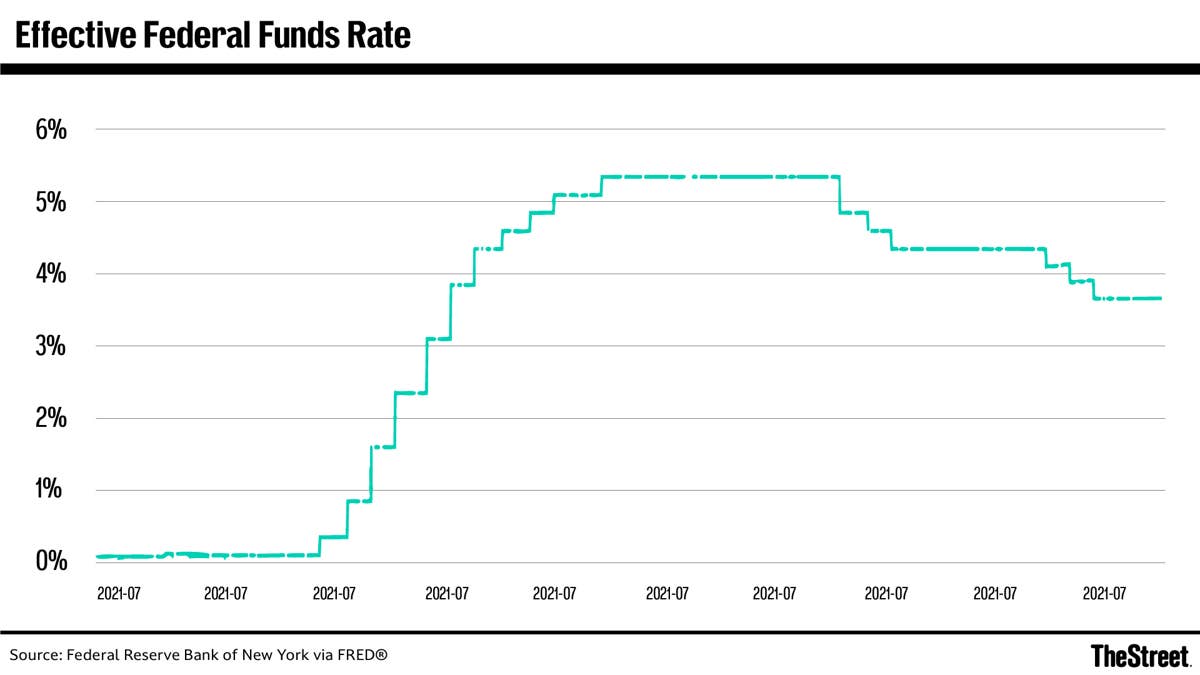
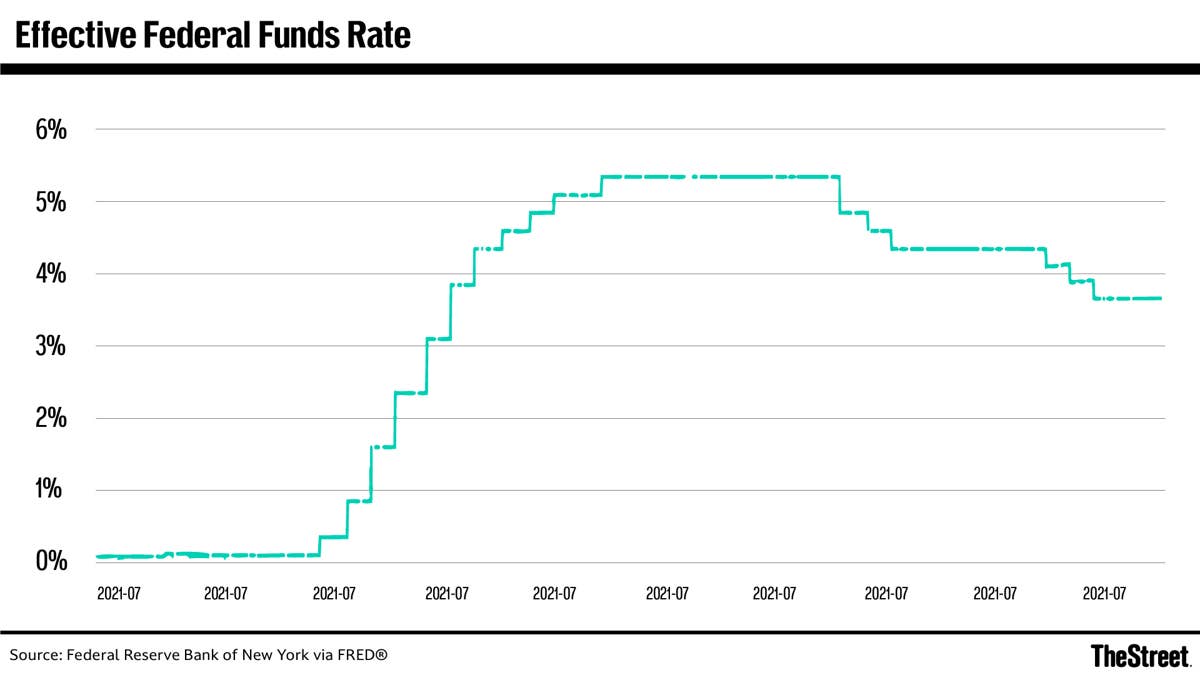
The FOMC, in a decisive 8-4 vote on April 29, held the benchmark Federal Funds Rate at 3.50% to 3.75%.
It was the first time in more than 30 years the FOMC vote reflected four dissents.
It was the FOMC’s third pause after cutting rates by 75 basis points during its last three meetings of 2025 to boost a weakening labor market.
Outgoing Chair Jerome Powell, who will break with tradition and remain on the Board of Governors, said in a press conference after the April meeting that the U.S. economy was “resilient” and showing signs of moving toward neutral.
A neutral state is when an economy operates at sustainable growth with stable inflation and full employment without overheating or recessionary pressure.
It can also mean interest rates move in either direction.
“People are not saying that we need to hike now,” Powell said.
Inflation clearly top of mind for many Fed officials
The April minutes, which don’t identify participants by name, reflect the deepening concerns of nearly all 19 Fed officials of the higher energy costs not only at American gas pumps but those dripping into prices across multiple goods and services.
Oil prices are up over 50% since the war began and showing little sign of retreating as long as the Strait of Hormutz remains blocked.
“The vast majority of participants noted an increased risk that inflation would take longer to return to the committee’s 2% objective than they had previously expected,” the minutes said.
In the weeks since the April meeting, several Fed officials have dropped strong warnings about the worsening inflation outlook, sending bond yields soaring.
Meanwhile, the labor market, while still fragile, is stabilizing.
FOMC April statement sparked cracks in rate-cut outlook
Outgoing Fed Governor Stephen I. Miran voted against the “wait-and-see” approach, preferring to lower the target range for the funds rate by 25 basis points.
Cleveland Fed President Beth M. Hammack, Minneapolis Fed President Neel Kashkari, and Dallas Fed President Lorie K. Logan also dissented.
But the April statement said the three regional bank heads “supported maintaining the target range for the Federal Funds Rate but did not support inclusion of an easing bias in the statement at this time.”
The newly-released minutes showed a more intense concern from Fed officials that inflation risk will be guiding future policy on a meeting-by-meeting basis.
Fed watchers expect the additional support could be driven from voting FOMC members who didn’t want to actually dissent and/or the regional bank presidents who aren’t voting this year.
The April FOMC statement said that “developments in the Middle East are contributing to a high level of uncertainty about the economic outlook.”
“The Committee’s assessments will take into account a wide range of information, including readings on labor market conditions, inflation pressures and inflation expectations, and financial and international developments,’’ the statement said.
Economists, traders adjust Fed rate-cut outlooks
The cumulative effects of the energy shock is testing the Fed’s confidence that inflation, which economists are forecasting to hit as high as 5% this summer, will fall back to its 2% goal.
Note: the annual inflation rate hasn’t hit that goal in five years mainly due to the pandemic.
A May 19 Reuters poll showed a hefty shift among economists away from previously solid expectations for rate cuts this year, with fewer than 50% now projecting a reduction by December, down from two-thirds just a month earlier.
Roughly half see no change in rates this year, and a handful of respondents penciled in at least one rate hike, the poll found.
The widely watched CME Group FedWatch Tool, which is based on futures prices, is showing 39% odds of no additional rate cuts this year and a 60% probability of at least one 25-basis-point cut.
Fed’s Paulson signals interest-rate outlook
Philadelphia Fed President and CEO Anna Paulson, who voted to hold rates steady at the April meeting, saidmonetary policy is currently in “a good place now” in a speech at the Federal Reserve Bank of Atlanta’s 2026 Financial Markets Conference in Amelia Island, Florida on May 19.
“Assuming the labor market remains in balance, rate cuts would only become appropriate once we have seen sustained progress on inflation,’’ Paulson said.
But she also signaled that future economic data may signal the need to tighten this stance.
“However, I think it is healthy that market participants have taken on board scenarios where the funds rate remains unchanged for an extended period, as well as scenarios where further tightening becomes necessary,’’ she said.
Related: Morgan Stanley resets Fed interest rate cut path for 2027
Paulson noted that if the Iran War is resolved soon and “shipping and oil production return to normal quickly, inflation and inflation risks are likely to subside relatively quickly.”
“If it takes more time to resolve, inflation and inflation risks, along with risks to the labor market, are likely to be elevated for longer,’’ she added.
Morgan Stanley sees two Fed rate cuts in 2027
Morgan Stanley is one of the few major Wall Street banks still forecasting interest-rate cuts.
In a May 18 note emailed to TheStreet, Morgan Stanley calls for two 25-basis-point rate cuts in 2027, one in March and the other in June.
“The bar for monetary easing has risen, and we expect the Fed to remain on hold through 2026 before beginning a gradual normalization cycle in 2027,’’ the note said.
The note said that despite back-to-back hot inflation reports last week and multiple forecasts that the Iran War energy shock will continue to spike prices this summer, those increases will be temporary much like the fading impact of tariffs on prices.
“Key assumptions underpinning our core inflation outlook are that tariff passthrough will fade over the coming months and that oil spillovers into core (inflation) will remain limited,’’ the note said.
Warsh, White House expected rate cuts this summer
The next FOMC meeting is June 16-17, Warsh’s first as chair.
President Donald Trump, who will host Warsh’s swearing-in ceremony at the White House May 22, has been extremely critical of Powell for not slashing interest rates to 1% or less over the last 16 months.
Warsh is a former Fed governor whose tight Wall Street connections aided with the central bank’s efforts to mitigate the 2008 financial crisis and the resulting Great Recession.
He has said he favors lower interest rates under a “regime change” instituting multiple reforms at the Fed, including fewer communications and a tightening of the Fed’s $6.7 trillion balance sheet.
Trump has backed away from expectations that Warsh would immediately lead his Fed colleagues into dramatically lowering rates while saying repeatedly that energy prices will quickly drop once the Iran War finally ends.
Top analyst drops bombshell interest-rate outlook
Ed Yardeni, President & Chief Investment Strategist at Yardeni Research, said in a May 18 note that the Fed will issue a 25 basis-point hike in July.
“We expect the Fed to hold rates unchanged at the June meeting and shift to a tightening policy stance,’’ the note said, adding that the macroeconomic backdrop no longer supports an easing bias, let alone a rate cut.”
But the note also said a more hawkish Fed under Warsh than investors expect “would actually work in Trump’s favor via its downward effect on long-term Treasury yields.”
Related: Major bank drops bombshell on Fed interest-rate bets
#Fed #officials #double #blunt #ratecut #message