
The death of the mall has been greatly exaggerated.
“Indoor malls and open-air centers have posted consistent year-over-year visit growth, outlet declines have been modest, and early 2026 data shows renewed momentum across all three formats,” according to data from Placer.ai.
Instead, malls have become tiered.
A small slice of high-end shopping centers is outperforming expectations, drawing shoppers, tenants, and capital even as most malls continue their long slide, reported The New York Times.
“Class A malls — typically dominant, luxury-leaning properties in affluent areas — are posting strong occupancy and rent growth. At Roosevelt Field on Long Island, owned by Simon Property Group, occupancy tops 96 percent with tenants like Hermès, Rolex, and Armani driving sales of roughly $1,250 per square foot,” according to The Real Deal.
The problem for retailers who built their businesses around malls is that Class A malls have become increasingly rare.
“Roughly 900 malls remain across the country, but the top 100 account for about half the sector’s value, while the bottom 350 make up just 10%,” added The Real Deal.
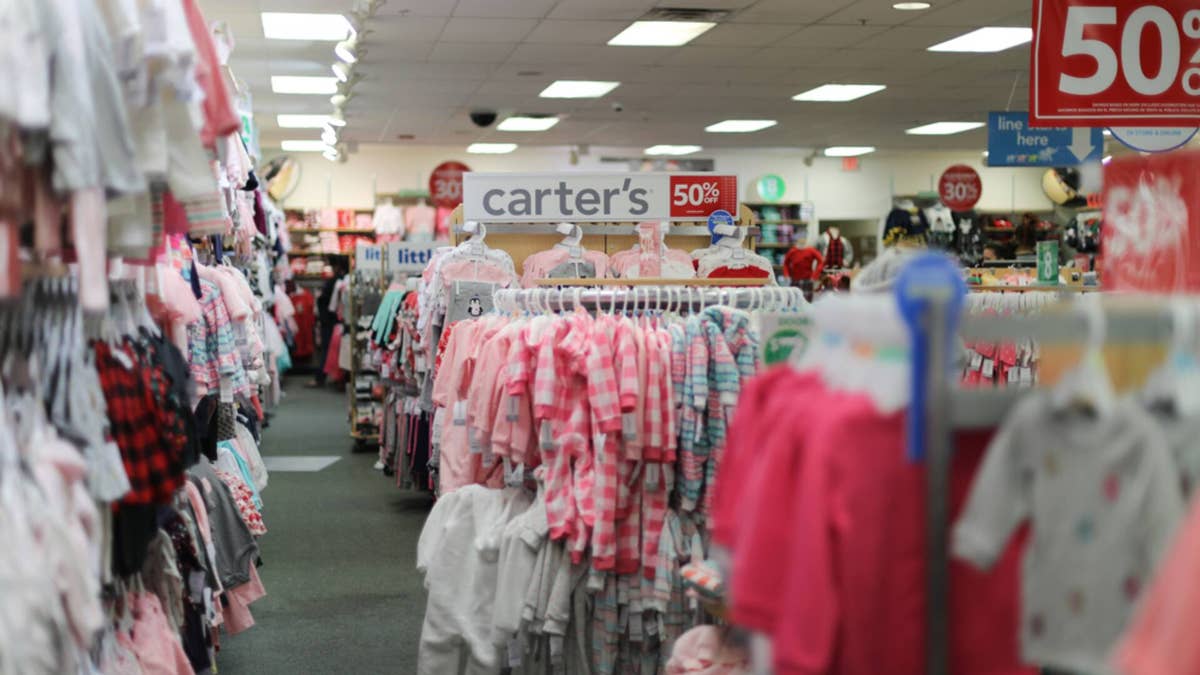
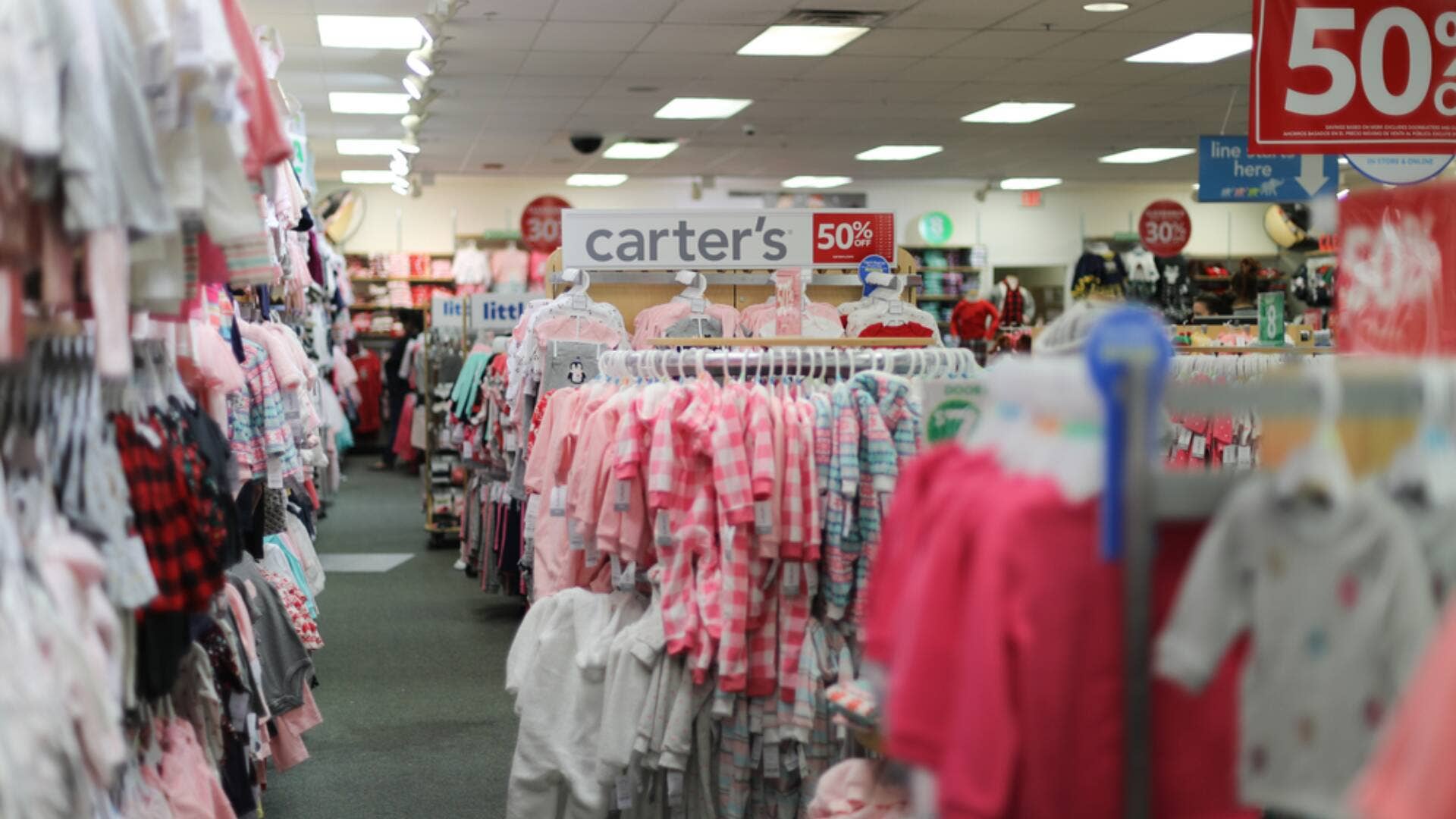
That’s forcing mall-based chains like children’s clothing retailer Carter’s to close stores and rethink their retail strategy.
Carter’s delivers steady sales, shrinking profit
Unlike many retailers, Carter’s has performed reasonably well as it works to stay ahead of changing retail trends. Its overall 2025 performance was mixed, but the company remains profitable, according to its fourth-quarter earnings release.
- Net sales $2.898 billion versus $2.844 billion in 2024, showing growth of 2%
- Operating margin 5% versus 9% in 2024
- Adjusted operating margin 6.1% versus 10.1% in 2024
- Diluted EPS $2.53 versus $5.12 in 2024
- Adjusted diluted EPS $3.47 versus $5.81 in 2024
- Operating cash flow $122 million
- $56 million returned to shareholders through dividends
“2025 was a year of meaningful progress in stabilizing our business while responding to significant new tariffs. We took actions to right-size our cost structure and we launched several important initiatives to improve the productivity of our merchandise assortments and store fleet,” said CEO Douglas C. Palladini.
The company’s cost-cutting efforts include plans to close 150 stores, a program that began in the third quarter of 2025 and continued into 2026.
Carter’s closing 150 stores
“We are pursuing several initiatives, including closing low-margin retail stores, right-sizing our organization, and honing product choices, which we believe will generate significant savings, improve overall cost structure, and provide investment capacity as we establish the foundation to return to consistent, profitable growth going forward,” the company shared in its Q3 earnings release.
Palladini shared a progress report on the store closures during Carter’s fourth-quarter earnings call.
More Retail:
- Another mall retailer quietly lcosed over 150 locations
- Ultra wealthy shoppers flock to this 63-year-old rugged retailer
- 72-year-old mall retailers to close more stores in 2026
“As we’ve discussed previously, our physical store fleet must be honed. We are now targeting 150 North America door closures, most as leases expire, up to 100 of which we expect to exit by the end of 2026,” he said.
Carter’s has also paused new store openings, but the company does plan a return to growth in the future.
“We’re investing in new store type testing, in-store experiences, and real estate strategy development as we seek greater fleet productivity as well as differentiated consumer experiences as distinct specialty destinations staffed by experts,” the CEO added.
Shutterstock
Carter’s faces more challenges
Wells Fargo analysts led by Ike Boruchow expressed some pessimism about management’s confidence in Carter’s plans in a note clients shared with Retail Dive.
“Considering top line is not growing, combined with the fact that wholesale visibility has become cloudier while store closures are set to accelerate, it’s hard for us to see where the confidence comes from,” Boruchow said. “On the margin front, there’s more tariff pressure coming than cost saves announced.”
As lower-tier malls lose traffic and relevance, chains like Carter’s Inc. — which historically relied on those locations — are increasingly forced to close stores and reposition their physical footprint.
GlobalData Managing Director Neil Saunders shared that a chain closing stores isn’t always part of a “retail apocalypse.” Instead, the shutdowns could be part of addressing deeper issues.
“Many of the chains closing stores are those that have problems that go beyond the economy. Their propositions might not be right, their offers might not be what consumers want, and they might not have responded to competitive threats in the right way,” he posted on LinkedIn.
Some chains, like Saks Fifth Avenue, simply waited too long to address the problem, while Carter’s has worked to get ahead of its challenges.
“Saks Global did not fail because department stores are broken,” said Saunders in a LinkedIn post in January 2026. “It failed because it broke its own business model.”
The mall story is no longer about decline so much as separation, with performance concentrating in top-tier centers while weaker properties steadily lose relevance. For Carter’s Inc., that shift is forcing a more selective store footprint and tighter cost discipline as it works through its turnaround.
Related: 58-year-old outdoors retailer nears Chapter 11 bankruptcy
#Mall #fashion #retailer #closes #stores #turnaround #push