
As President Donald Trump continues to suggest a deal with Iran is close, he finds himself caught between two extremes: Tehran’s demand for financial relief and an end to attacks, and pressure from Republican hawks to “finish the job” — or at least not to sign a bad deal.
The competing pressures have, so far, kept an agreement to end the war out of reach. And they have resulted in the administration’s swinging between promises of an imminent deal and threats to resume military operations.
Adding to the challenge are his own comments over the years lambasting his predecessors for signing or considering deals similar to the one that has the best chance of success.
This time around, Trump’s own actions have raised the stakes. After a succession of attacks targeting the country’s nuclear program, its military and its missile capabilities, Iran has managed to retain its chokehold over the Strait of Hormuz, causing energy prices to soar, fueling inflation and piling pressure on Trump ahead of midterm elections.
“This is what is adding to the pressure for the president to come to some kind of resolution,” said Mona Yacoubian, a former US official and Middle East expert at the Center for Strategic and International Studies. “How to do that in a way that doesn’t end up looking like Iran has somehow emerged on top is, I think, going to be extraordinarily difficult.”
The challenge has been underscored by a head-spinning series of developments in recent weeks. The US and Israel launched the war against Iran in late February and agreed to a ceasefire in early April even as Iran retained control over the strait.
In the weeks since, Trump has repeatedly said a deal was close and Iran is desperate to end the conflict, even as a solution has never materialized. After speculation late last week that the two sides were on the cusp of an agreement, Trump ordered new strikes on the country over the weekend.
ADVERTISEMENT
CONTINUE READING BELOW
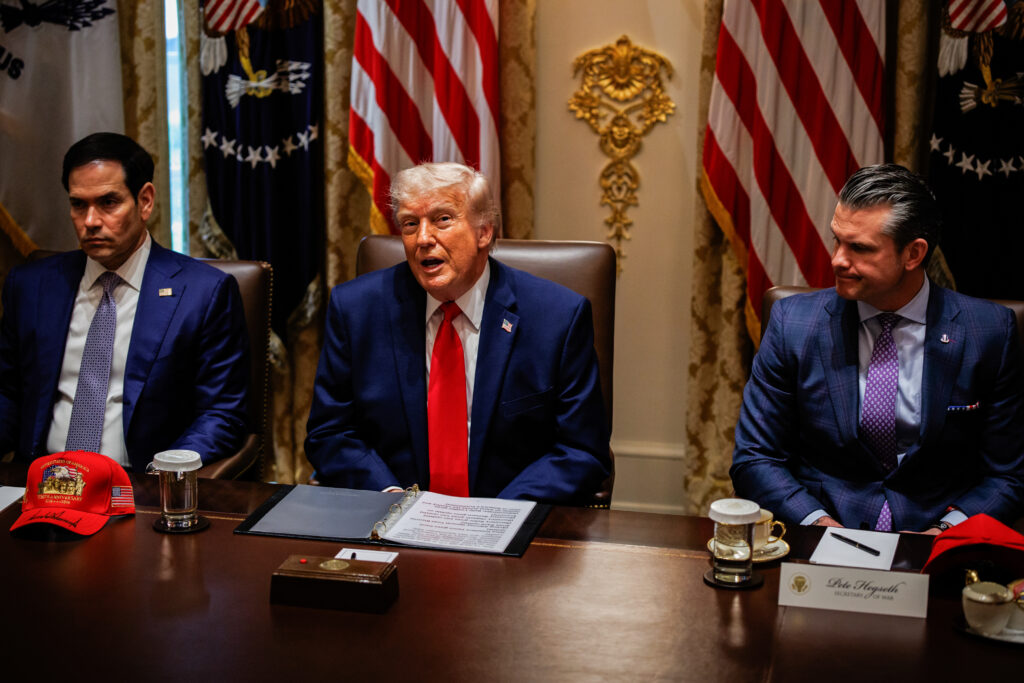
At a White House cabinet meeting on Wednesday, Trump said he wouldn’t strike a bad deal and insisted “we’re not talking about any easing of sanctions — no money, no nothing.” But then he added: “When they behave properly and when they do what’s right, we’ll let them have their money.”
Just hours later, US forces carried out airstrikes on an Iranian military site and shot down four one-way attack drones, according to a US official, the latest challenge to an increasingly shaky ceasefire.
In his first term, Trump called former President Barack Obama’s entry into the 2015 international nuclear agreement with Iran “the worst deal ever negotiated” and pulled out. He criticised the Joint Comprehensive Plan of Action for lifting “crippling economic sanctions on Iran in exchange for very weak limits on the regime’s nuclear activity,” and for not curbing Iran’s support for militant groups across the Middle East.
With pressure to end the war growing, the White House is now weighing an interim deal that would prioritize opening Hormuz while delaying talks on nuclear issues as well as Iran’s conventional missile program and its support for proxies.
The criticism among Trump’s hawkish political allies is that the urgency to end the war may lead the president to make a bad deal and that it makes more sense to bomb Iran into opening the strait rather than giving Tehran an economic lifeline.
“We are at a moment that will define President Trump’s legacy,” Senator Roger Wicker of Mississippi, chair of the Senate Armed Services Committee, said in a statement on May 22. “His instincts have been to finish the job he started in Iran, but he is being ill advised to pursue a deal that would not be worth the paper it is written on.”
Mike Pompeo, who served as secretary of state during Trump’s first term, likened the deal the president is now considering to the “playbook” used by Obama administration officials on the 2015 accord, arguing it was “not remotely America First.” That prompted a rejoinder from the White House communications chief, Steven Cheung, who said Pompeo “should shut his stupid mouth and leave the real work to the professionals.”
ADVERTISEMENT:
CONTINUE READING BELOW
“President Trump is very sensitive to the criticism he gets from the right, which is to some extent hard to understand because President Trump has shown himself to be in such firm control of the Republican party,” said Michael Singh, a Middle East-focused White House official during George W. Bush’s presidency now at the Washington Institute for Near East Policy.
“Without reopening the strait, obviously, it’s tough for Trump to characterise the conflict as successful, as a victory,” Singh said.
Iranian negotiators also have demanded access to frozen funds, raising the possibility that a deal to open Hormuz and end the war provides either sanctions relief or a cash infusion for Tehran — something Trump has also criticised.
After leaving the White House, Trump called then-President Joe Biden “INCOMPETENT AND STUPID” for approving a prisoner exchange that granted Tehran access to $6 billion in oil revenues to be used for humanitarian purchases shortly before Hamas militants attacked Israel on October 7, 2023.
Trump has also had to overcome the expectations set by his own administration since he launched the war, with US officials constantly claiming Iran is desperate for a deal and Defense Secretary Pete Hegseth declaring an “overwhelming victory” nearly two months ago.
“The president’s conduct of the war has constrained his choices to escalation or humiliation,” said Kori Schake, a former US official now with the American Enterprise Institute. “So I think to avoid both, he’s likely to drag out negotiations.”
© 2026 Bloomberg
#Trumps #bind #deepens #Hormuz #shut #hawks #pushing #war