
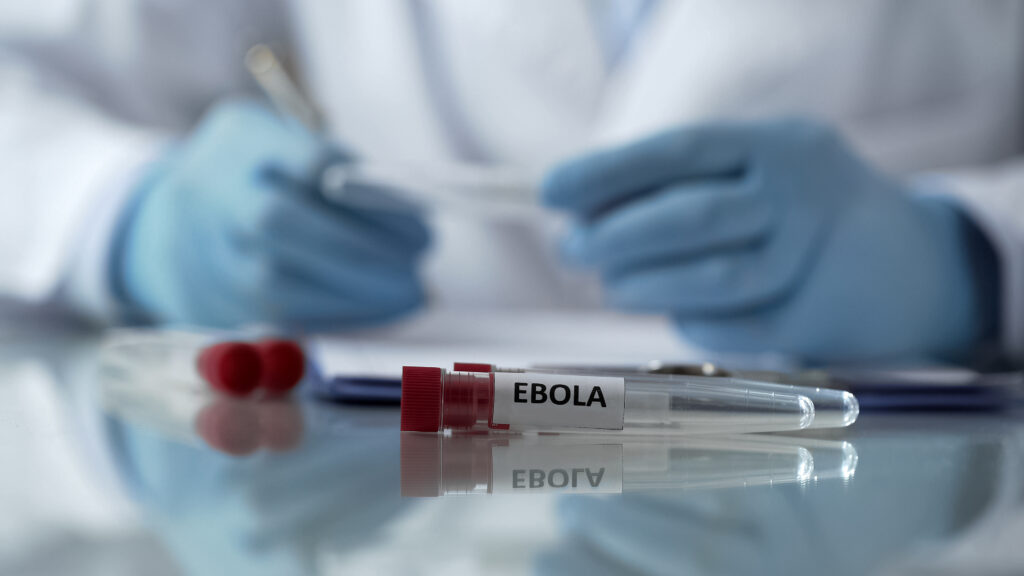
The World Health Organization declared the Ebola outbreak in Democratic Republic of Congo and Uganda a public health emergency of international concern, seeking to mobilize support against a rare virus strain that likely has spread for weeks undetected and has no approved vaccine or treatment.
The outbreak caused by Bundibugyo ebolavirus met the threshold for its highest level of alarm under international health regulations because of cross-border transmission, unexplained clusters of deaths and major uncertainty about the scale of the epidemic, the WHO said Sunday.
The declaration follows confirmation of Ebola cases in Uganda’s capital Kampala and in Kinshasa, Congo’s sprawling capital of about 20 million people.
This is exposing the severe logistical constraints facing responders. Bunia in eastern Congo lies about 1,700 kilometers (1,056 miles) from Kinshasa, and aid workers say moving personnel, laboratory samples and medical supplies around the region has become increasingly difficult since Rwanda-backed M23 rebels shut Goma’s airport more than a year ago.
Goma, a large city in eastern Congo, has historically served as the region’s humanitarian hub, housing major aid agencies and medical warehouses. Congo’s Health Ministry has dispatched two planes to Bunia, but transport and response efforts are still expected to face major challenges because of armed rebels and limited infrastructure.
“This event is considered extraordinary,” WHO Director-General Tedros Adhanom Ghebreyesus said in the declaration, citing the lack of approved vaccines or treatments for the Bundibugyo strain, insecurity in eastern Congo and signs the outbreak may be larger than reported.
Congo has reported eight confirmed cases, 336 suspected infections and 87 suspected deaths in Ituri province, according to Africa Centres for Disease Control and Prevention. Uganda has confirmed two cases in Kampala, including one death, among travelers from Congo.
Extensive uncontrolled community transmission is likely after a four-week detection delay from the first symptomatic case. Initial testing found eight positive Ebola samples among 13 specimens collected from different areas, while additional unexplained deaths and suspected cases have been reported across Ituri and neighboring North Kivu province.
ADVERTISEMENT
CONTINUE READING BELOW
At least four healthcare workers have died in circumstances consistent with viral hemorrhagic fever, raising concerns about transmission inside clinics and hospitals.
The WHO declaration, known as a PHEIC, is intended to mobilize international funding, coordination and emergency response efforts. It’s the first such declaration since mpox was designated a global health emergency in 2024.
The agency stopped short of declaring a “pandemic emergency,” a new category created under revised international health regulations after Covid-19.
Bundibugyo ebolavirus is one of the rarest Ebola species known to infect humans. It has caused only two previous documented outbreaks — in Uganda in 2007 and eastern Congo in 2012. Combined, those outbreaks resulted in fewer cases than the current epidemic has already generated.
Most Ebola vaccines and antibody treatments were developed against the more common and deadlier Zaire strain after the devastating West African epidemic a decade ago that killed more than 11,000 people.
“Ebola Zaire is the one that got all the attention, for very good reasons,” Susan McLellan, director of the biocontainment care unit at the University of Texas Medical Branch, said in an interview Friday.
No country should close borders or impose travel or trade restrictions, both the WHO and Africa CDC said, arguing such measures are ineffective and risk driving movement through unmonitored crossings.
ADVERTISEMENT:
CONTINUE READING BELOW
Instead, the agencies urged neighboring countries to strengthen surveillance, laboratory testing and infection-control measures.
Centered near the Ugandan border, the initial outbreak area includes the gold-mining town of Mongbwalu, where workers frequently move between remote camps and regional trading hubs.
The urban or semi-urban nature of some transmission hotspots heightened the risk of wider spread, the WHO said, drawing comparisons to Congo’s major Ebola epidemic in North Kivu and Ituri in 2018-19. The agency also called for urgent clinical trials of experimental vaccines and therapeutics.
Health officials are considering several potential treatments, including monoclonal antibodies and Gilead Sciences Inc.’s antiviral remdesivir, though none are approved specifically for Bundibugyo infections. Vaccine candidates from groups including Oxford University and Moderna Inc. are also under review.
The latest declaration comes as global health experts warn that cuts to US foreign aid and disease-surveillance programs could weaken outbreak response capacity in vulnerable regions.
Congo has battled more than a dozen Ebola outbreaks over the past half century and has developed deep expertise in containing the disease. Yet conflict, poor infrastructure and distrust of authorities continue to complicate containment efforts in the east.
© 2026 Bloomberg
#Ebola #emergency #declaration #seeks #spur #global #response