
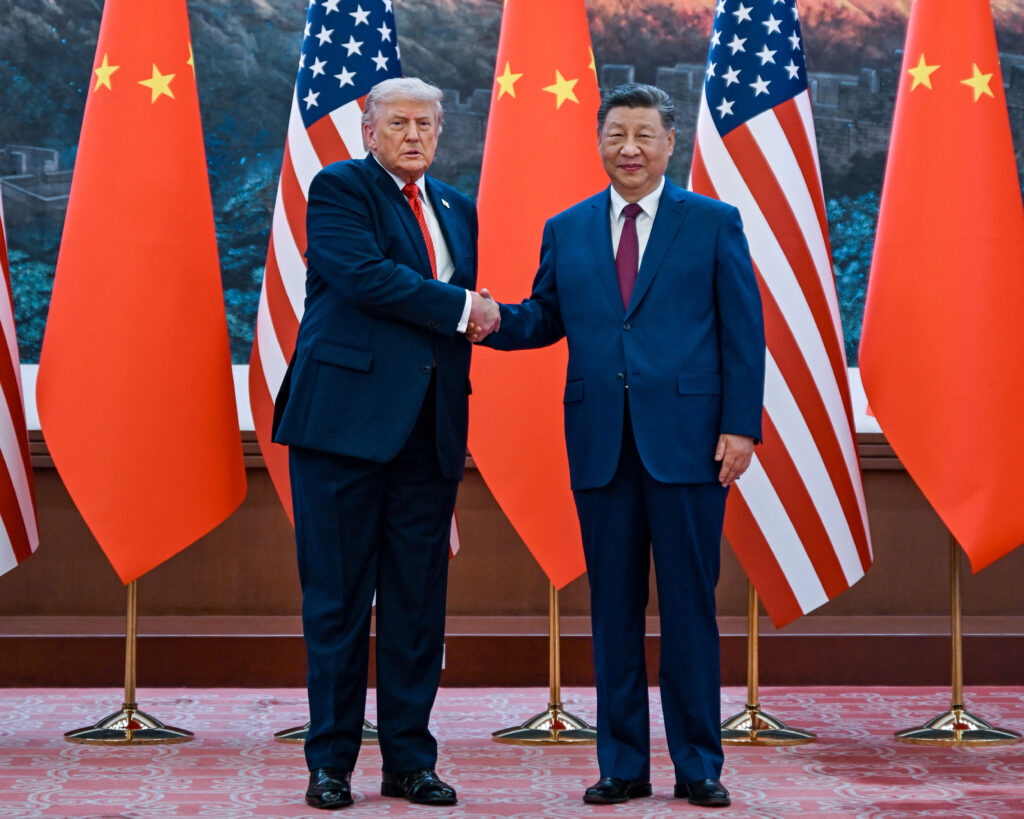
Donald Trump got the pageantry he craved during his trip to China. But the US president concluded the summit largely where he began, receiving little help from his “friend” Xi Jinping in dealing with a messy war in Iran and a challenging political climate at home.
The two presidents put on a display of warmth and respect during their two-day summit in Beijing. Trump praised China as a beautiful place and called his counterpart a great leader. Xi, for his part, welcomed Trump with military honors, flag-waving children, a gift of rose seeds and a toast to his health.
The friendly scenes and show of stability may be the biggest takeaway from the visit, which occurred under mounting concerns about the economic fallout of a Middle East conflict that is stoking global inflation, as well as increasingly public tension over Taiwan. As Trump boarded Air Force One to leave Beijing on Friday, the paltry set of deliverables underscored the rushed and chaotic planning for the trip as he grappled with the Iran war and a range of domestic issues.
Nonetheless, Trump portrayed the trip as a success, and it was — for some. Here’s a list of initial winners and losers:
The winners
Xi Jinping
The Chinese president appeared to want a calm summit without fireworks or controversy, and he got it. Trump’s presence in Beijing and warm words for China’s government handed the Communist Party leader a propaganda victory, seen in part by his silence over Xi’s contention they had established a new “constructive, strategic, stable relationship.”
Xi’s people managed to outmaneuver the White House on messaging, too: His remarks about Taiwan to Trump before the conclusion of their initial bilateral meeting generated news coverage that led with Beijing’s position on the semi-autonomous island.
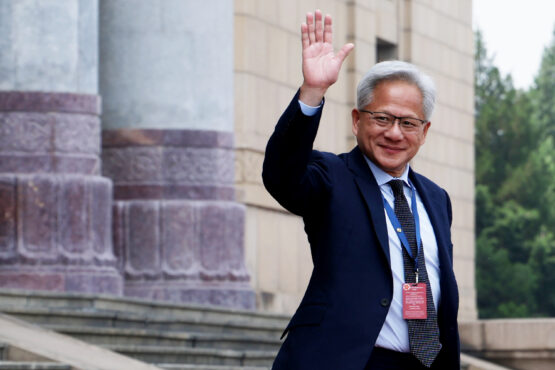
Jensen Huang at the Great Hall of the People on May 14. Image: Alex Wong/Getty Images
ADVERTISEMENT
CONTINUE READING BELOW
Jensen Huang
The Nvidia Corp chief looked like a potential loser earlier this week when his name was left off the list of CEOs the White House invited to join the president in Beijing.
Fast forward to Wednesday, and guess who showed up on the tarmac in Alaska during a refueling stop? Huang himself strolled toward Air Force One, joining Trump and Elon Musk as they flew the rest of the way to Beijing. While Nvidia’s chips may not have been a major topic at the summit, his face time with the president and inclusion in the delegation provided fresh momentum to his push to open up China’s markets to Nvidia’s business.
Visa Inc
Trump threw his weight behind the US credit card giant’s push for entry into mainland China’s massive payments market. CEO Ryan McInerney was among the group of approximately 30 US corporate executives in Trump’s delegation, and the US president told Fox News that he personally pressured Xi to open access to a market that had 10.2 billion bank cards in circulation at the end of 2025, with transaction value totaling 963.6 trillion yuan ($142 trillion) last year, according to the People’s Bank of China.
“Visa is a big deal. I said, what about using Visa in China? For some reason, they were blackballed, and maybe that’ll come off,” Trump said.
Iran
The war was expected to dominate — if not overshadow — the summit, with US officials making clear before arriving in Beijing that they were hopeful Xi would agree to exert pressure on the Iranian regime to strike a peace deal, which has so far proved elusive. In the end, Trump publicly celebrated positions China had already staked out: that the Strait of Hormuz should remain open, that Tehran shouldn’t have a nuclear weapon, and that Beijing wouldn’t sell military equipment to Iran.
Trump said Xi offered to help, and it’s still possible China will crack down on dual-use technology or strong-arm Iran behind the scenes. But China, the predominant buyer of Iranian oil, didn’t even mention Iran by name in its public statements. Trump, meanwhile, shrugged off one of his own key asks — the recovery of highly enriched uranium — as mostly a public relations exercise. The status quo may help Iran, which has resisted Trump’s push for a peace deal, even as he threatens further military action after weeks of a shaky ceasefire.
ADVERTISEMENT:
CONTINUE READING BELOW
The losers
Taiwan
Trump didn’t want to talk much about Taiwan before his trip to Beijing. Xi did.
China debuted new, tough language warning of potential conflict with the US, which supplies arms to the island democracy that China views as its own. A White House statement about the meeting didn’t mention Taiwan at all, although Secretary of State Marco Rubio said in a subsequent television interview that US policy hadn’t changed.
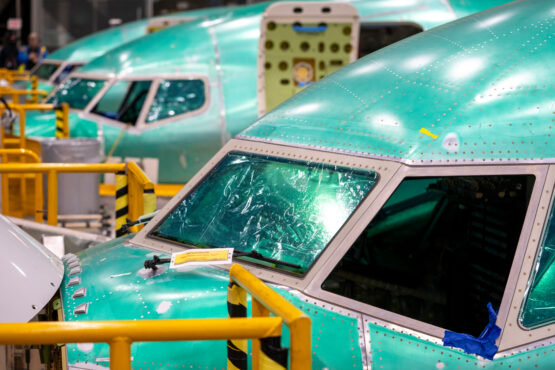
Boeing airplanes at the company’s manufacturing facility in Renton, Washington, US. Photographer: M. Scott Brauer/Bloomberg
Boeing Inc
Planes, planes, planes. The US aerospace giant had been high on the list of expected winners from the summit, with speculation that Beijing would put in an order for as many as 500 new aircraft. In the end, Trump said they committed to buy 200. He portrayed that as a victory, saying Boeing had hoped for 150, but the number didn’t match expectations set before the summit, and the company’s stock took a hit.
Congressional Republicans
Major agricultural or trade deals could’ve offered the president’s allies some momentum ahead of November’s midterm elections.
ADVERTISEMENT:
CONTINUE READING BELOW
But the agreements previewed by the White House appeared more spark than sizzle. Officials indicated a plan that could see tariffs rolled back on some $30 billion in Chinese products from non-critical industries would likely take months of administrative work before coming online. Trump bragged that Xi was interested in buying oil from the US, but also indicated no deal had been finalised.
And while Jamieson Greer, Trump’s trade representative, suggested that China would make double-digit billion-dollar purchases of agricultural products over the next three years, he also conceded that the agricultural calendar meant some key purchases — like soybeans — wouldn’t be concluded until the fall. Futures fell.
Meanwhile, an agreement reopening China to US beef comes as meat prices at home remain a concern for voters.
Secret service & the US press corps
While most of the attention was on the leaders of the world’s biggest economies, an unexpected sideshow occurred among the players who accompany Trump wherever he goes: reporters and Secret Service agents.
On Thursday at the Great Hall of the People, Chinese reporters stormed into the bilateral meeting between Trump and Xi, trampling over one US official, who came away with a swollen foot. Later at the Temple of Heaven, which Xi showed Trump as part of a cultural aside, Chinese officials prevented a Secret Service agent accompanying reporters from entering the grounds because he was carrying a weapon.
Later, while the two leaders viewed the landmark, Chinese officials ushered the press into a nearby building and wouldn’t let them leave. The journalists and their US handlers eventually charged out in a bid to join Trump’s departing motorcade, running past Chinese officials who tried to stop them. The spat spurred media coverage back in the US, threatening to overshadow other elements of the trip.
© 2026 Bloomberg
#Winners #losers #Trump #Xis #twoday #Beijing #summit