
You can also listen to this podcast on iono.fm here.
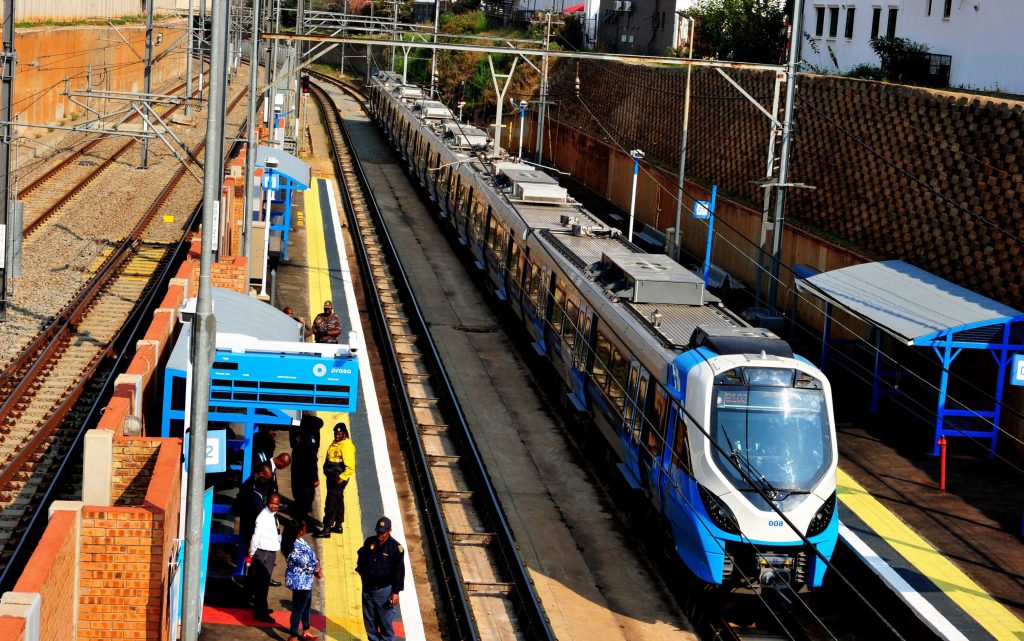
JEREMY MAGGS: South Africa’s rail crisis, I don’t think I need to tell you, has dragged on for so long that the debate is no longer about diagnosing the failure, but about whether government and industry, the private sector, can finally execute a credible fix. The state says billions are being directed towards rail recovery. Prasa (Passenger Rail Agency of South Africa), as you might know, has brought back most of its passenger corridors, signalling that upgrades are underway. Private freight operators, this has been well reported, are being brought into the network.
Read/listen:
Treasury wants more private sector help around fixed investment
Transnet signals turnaround as private operators enter rail and ports
But after years of decline, of theft, underinvestment and missed targets, I think the real question is whether this is a genuine recovery or just another phase of reform language without enough delivery on the ground. Someone who’s applied his mind to that is Florian Kellenberger, who’s chief executive officer of Siemens Mobility South Africa. Florian, welcome to you. Maybe let’s get some context first. In your opinion, what is the single biggest reason that South Africa’s rail recovery still keeps stalling?
FLORIAN KELLENBERGER: Yeah, what is the biggest reason, I think we have to invest in the South African rail business. This is something you also mentioned before, we have a lot of things in our backlog and for a good recovery, now we have to go forward and yeah, bring rail into good shape, so to say.
JEREMY MAGGS: Do you think we underestimate how much vandalism and cable theft has actually wiped out technical progress that has been made so far?
ADVERTISEMENT
CONTINUE READING BELOW
FLORIAN KELLENBERGER: I don’t think that we underestimate, but I think it’s a huge threat… They are now able to deal much better with this situation and to fix this situation and bring it on a very good way – how we can deal with it and can get mostly rid of that.
JEREMY MAGGS: There is some optimism here, Florian, as I referenced, that government is seriously talking about money and reform. Do you think, as someone who plays in the space, that this is more meaningfully different than we’ve heard in the past?
FLORIAN KELLENBERGER: Yes, I think we are very well structured with how we want to spend the money and where we want to go.
Even seeing that countries from the outside are looking in and are willing to invest, this shows me that we are on a very good path.
JEREMY MAGGS: How important in this whole recovery equation is the application of better and more effective technology?
FLORIAN KELLENBERGER: Technology is very important because, for example, we as Siemens Mobility, we have global proven technologies, and we can use these technologies to make it easier, to make it faster and to speed up the whole value chain and use them for the operators but also use them for the for the people who use the trains. For example, with the ticketing.
JEREMY MAGGS: So how do you start prioritising technology when it comes to a big build like this?
ADVERTISEMENT:
CONTINUE READING BELOW
FLORIAN KELLENBERGER: The first thing is we have to take the proven technologies, we have standardised technologies, and then the third thing is we need very good execution discipline that we deliver on time. So these are, from my side, the priorities we have to take care of.
Read:
Trains will be back on this Joburg line soon
South Africa seeks private investment in passenger rail services
Court rules #UniteBehind can be added to Prasa corruption case
JEREMY MAGGS: How do you get execution discipline right in this particular respect. Because unless that’s done properly, it doesn’t matter how much money you spend on a particular issue, it’s going to fail. So how do you get that side of the equation right?
FLORIAN KELLENBERGER: Rail infrastructure is a marathon; it’s not a sprint and not a short-term project. We have to take care that the suppliers we work with are reliable, also that our projects are reliable and that we have a very good idea how we want to execute the projects on a timeline basis and with whom we have to speak to to improve our timetables.
JEREMY MAGGS: As someone who sits slightly outside of the circle, opening the network, and I’m specifically referring here to Transnet, opening it to private operators does sound promising, Florian, but it all hinges on whether Transnet has the capacity to make that work properly. Are you confident in that respect as a private sector player?
FLORIAN KELLENBERGER: Yes, we are. We see that there are a lot of things going on, and we also see that there are very good possibilities to get the best out of both worlds. We can bring in our expertise from the private sector, and we can also use the expertise from a government perspective. When we bring this together, I think we can improve and especially we can speed up the modernisation of our rail infrastructure.
Read:
Creecy announces breakthrough in SA rail reform: 11 TOCs approved
Does SA’s transport reforms risk repeating Telkom’s mistakes?
Transnet to issue request for proposals for private rail partners soon
ADVERTISEMENT:
CONTINUE READING BELOW
JEREMY MAGGS: Do you think current investment plans such as there are enough, given the scale of the problem across freight and passenger rail in this country?
FLORIAN KELLENBERGER: That’s a good question. I think all the time it can be higher, but I think we also have to think with a lot of money, when we want to spend this money, we have to take care that we have the capacity that we can really invest and really create an impact with this money, because I think that’s an important topic that we spend the money in the right way. It’s not only the amount of money, it’s also, like I said before, the execution and that this money really creates an impact.
JEREMY MAGGS: It’s all about meaningful impact, isn’t it? And this is a last question to you, what do you think should be used as the real test over the next 12 to 24 months to see, to judge, Florian, whether rail in this country is genuinely turning around? In other words, what’s the right measurement matrix here?
FLORIAN KELLENBERGER: I think there are different measurements. I think one measurement will be do the people use our trains? Can they reliably use our transportation system and also for freight, can we get much more freight on rail? I think there are many products that we can deliver from mining to the harbour. This is something where we can really measure it and where we can see how we as a whole rail network can create impact.
JEREMY MAGGS: Florian Kellenberger, thank you very much indeed. He is the chief executive officer of Siemens Mobility South Africa.
Read:
Transnet receives R16.1bn to improve the state of its network
Traxtion kickstarts private SA rail boom with R3.4bn investment
Grindrod opens first phase of R200m Cape Town depot
SA targets cable thieves holding economy to ransom [Feb 2022]
#finally #deliver #credible #rail #recovery