
Well, no one saw that coming.
A hike in interest rates may not be imminent but the tea leaves from this week’s Federal Open Market Committee meeting indicate that surging energy prices from the Iran War is on the radar of some of its 12 members.
Scott Pike, senior portfolio manager at Income Research + Management, told Bloomberg that the “market appeared somewhat surprised’’ by the FOMC statement.
It showed that three members dissenting from the April 29 vote not to hold rates steady but in favor of changing the statement’s language and “removing the easing bias that has been in place since last year.”
“Today’s vote confirms that incoming Fed Chair Kevin Warsh will lead a committee that may not be aligned with his policy views,’’ Pike said.
Outgoing Fed Chair Jerome Powell was asked whether most of the committee thinks that the bias is towards cutting rates.
He said that the center of the committee is “moving toward a more neutral place.”
A neutral state is when an economy operates at sustainable growth with stable inflation and full employment without overheating or recessionary pressure.
It can also mean interest-rates move in either direction.
But Powell added: “People are not saying that we need to hike now.”
Traders at the CME Group FedWatch Tool are pricing in the next cut in benchmark interest rates as late 2027, almost four quarters later than what was expected at the beginning of this year.
FOMC holds rates steady in 8-4 decisive vote
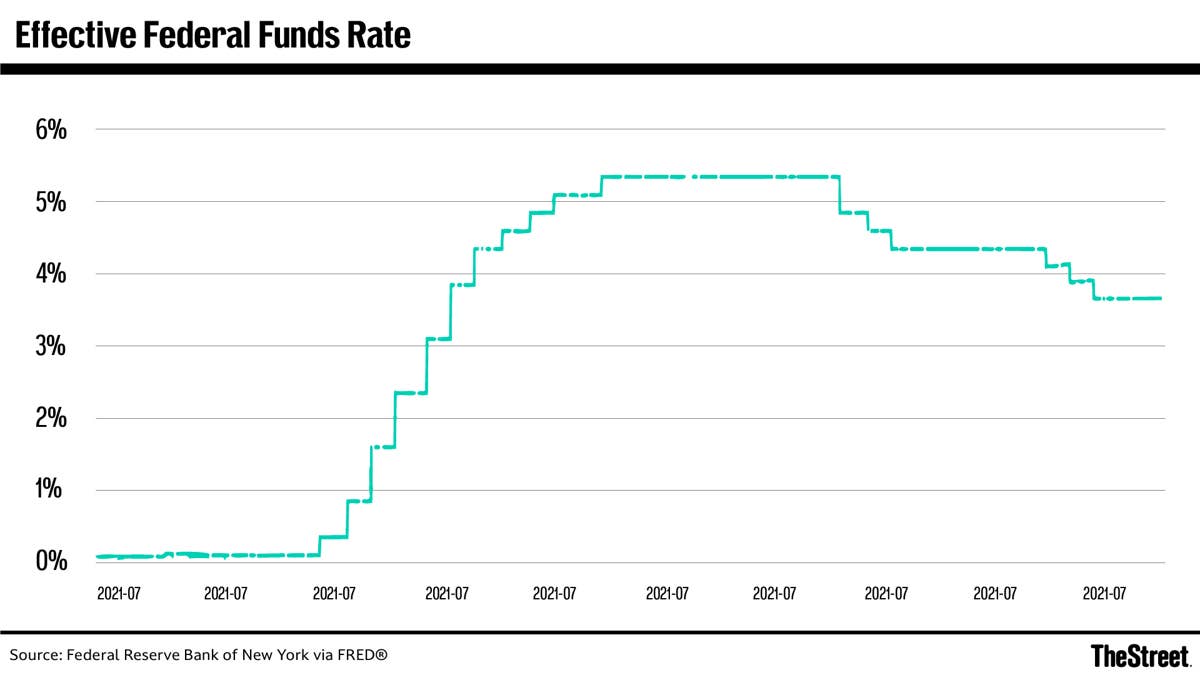
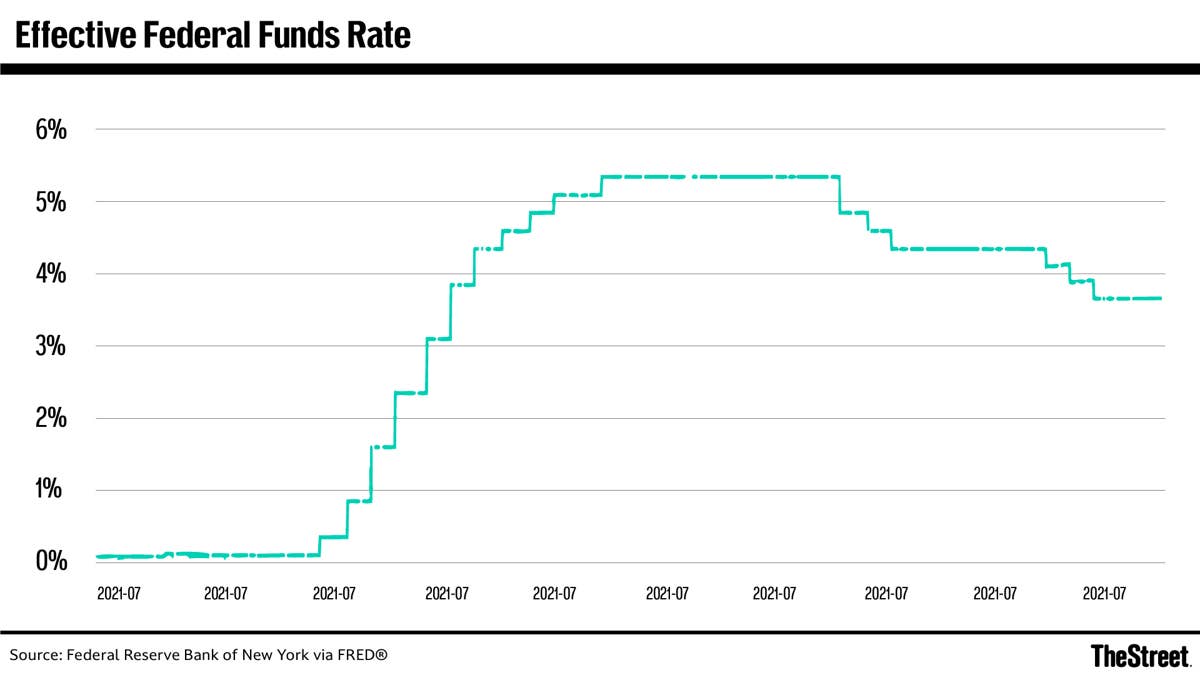
The FOMC, in a decisive 8-4 vote, held the benchmark Federal Funds Rate at 3.50% to 3.75%.
It was the first time in more than 30 years the FOMC vote reflected four dissents.
It was the FOMC’s third pause after cutting rates by 75 basis points during its last three meetings of 2025 due to a weakening labor market.
The FOMC statement said that “developments in the Middle East are contributing to a high level of uncertainty about the economic outlook.”
“The Committee’s assessments will take into account a wide range of information, including readings on labor market conditions, inflation pressures and inflation expectations, and financial and international developments,’’ the statement said.
How the FOMC dissenters voted
Fed Governor Stephen I. Miran voted against the “wait-and-see” approach, preferring to lower the target range for the funds rate by 25 basis points.
Cleveland Fed President Beth M. Hammack, Minneapolis Fed President Neel Kashkari, and Dallas Fed President Lorie K. Logan also dissented.
The statement said the regional bank heads “supported maintaining the target range for the Federal Funds Rate but did not support inclusion of an easing bias in the statement at this time.”
Greg Gizzi, head of fixed income and municipal bonds at Nomura Asset Management International, told TheStreet that the three regional bank presidents, via their dissents, “were attempting to establish they will not carelessly support a dovish agenda before Warsh takes the helm as Fed Chair.”
The specific language they opposed “isn’t explicitly dovish, it has been interpreted that way in the past. Using the word additional, after previous cuts, infers an easing bias.”
FOMC dissent sends strong message to Warsh
Powell said the dissenters wanted to be clear that the next rate move could be a hike, but that they weren’t pushing to raise rates at the April meeting.
Bloomberg Economics’ Anna Wong and Stuart Paul said the FOMC policy statement also strengthened the description of inflation to ‘‘elevated,’’ from ‘‘somewhat elevated.’’
“Together with the divisions evident on the committee, that underscores the challenge for Kevin Warsh…to deliver the rate cuts Trump wants. Absent a significant deterioration in the labor market, it’s hard to imagine this fractured committee cutting anytime soon,’’ they said.
Powell notes resilience despite economic shocks
High gas prices are forcing many American consumers to cut back spending in other areas, which will cause economic growth to drag.
But Powell said that hasn’t happened yet, and it isn’t clear when it will, describing the economy as “resilient” despite the pandemic, the wars in Ukraine and Iran, and President Trump’s tariffs.
Related: Debates over Fed 2026 rate cuts may surprise you
The cumulative effects of these economic shocks are testing the Fed’s confidence that inflation, which is running around 3%, will fall back down to its 2% goal.
“The U.S. economy has just powered through shock after shock,” he said. “People are still spending.”
According to Reuters, Omair Sharif, president of forecasting firm Inflation Insights, said in a note to clients that the fractious FOMC policy vote made some level of sense.
“The new statement upgraded the concern on inflation,” he said, adding that it is “not surprising” some officials didn’t agree with the move to retain an easing bias given price pressure worries.
Powell had a surprise of his own
The original anticipated drama associated with the April FOMC meeting focused on whether Powell was going to retire when his term as Chair expires next month.
“After my term as Chair ends on May 15, I will continue to serve as a governor for a period of time to be determined,” Powell said at the post-FOMC press conference.
He cited the lingering legal threats against him and the central bank as part of a high pressure attempt by President Donald Trump to substantially lower benchmark interest rates.
While not commenting directly about the president, Powell said the independence of the Fed was clearly at risk due to attempted political interference which “left me no choice.”
“I worry that these attacks are battering the institution and putting at risk the thing that really matters to the public, which is the ability to conduct monetary policy without taking into consideration political factors,” Powell said, adding that he planned “to keep a low profile as a governor.”
Powell said he would not be a “shadow chair” to Warsh whose Senate confirmation as Fed Chair is expected by May 15.
Still, the White House was not amused
Treasury Secretary Scott Bessent told Fox Business that Powell’s decision to remain as governor was “highly unusual” and an “insult” to Warsh, whose confirmation by the Senate is pending.
“It’s highly unusual what soon-to-be former Chair Powell did,” Bessent said, noting that the “last time a Fed chair stayed on the board it was at the request of the president.”
“One thing I can promise you is that President Trump did not request for Jay Powell to stay,” Bessent said. “This is a violation of all Federal Reserve norms.”
Historically, Fed chairs retire from the central bank when those terms expire.
“Now that Powell has decided to remain past May, Warsh will be nominated to Miran’s seat, which removes the most dovish member of the board,’’ Gizzi said.
The next FOMC meeting is June 16-17.
Related: Historic Fed showdown at stake as Powell weighs major decision
#Fed #drops #ratecut #bombshell