
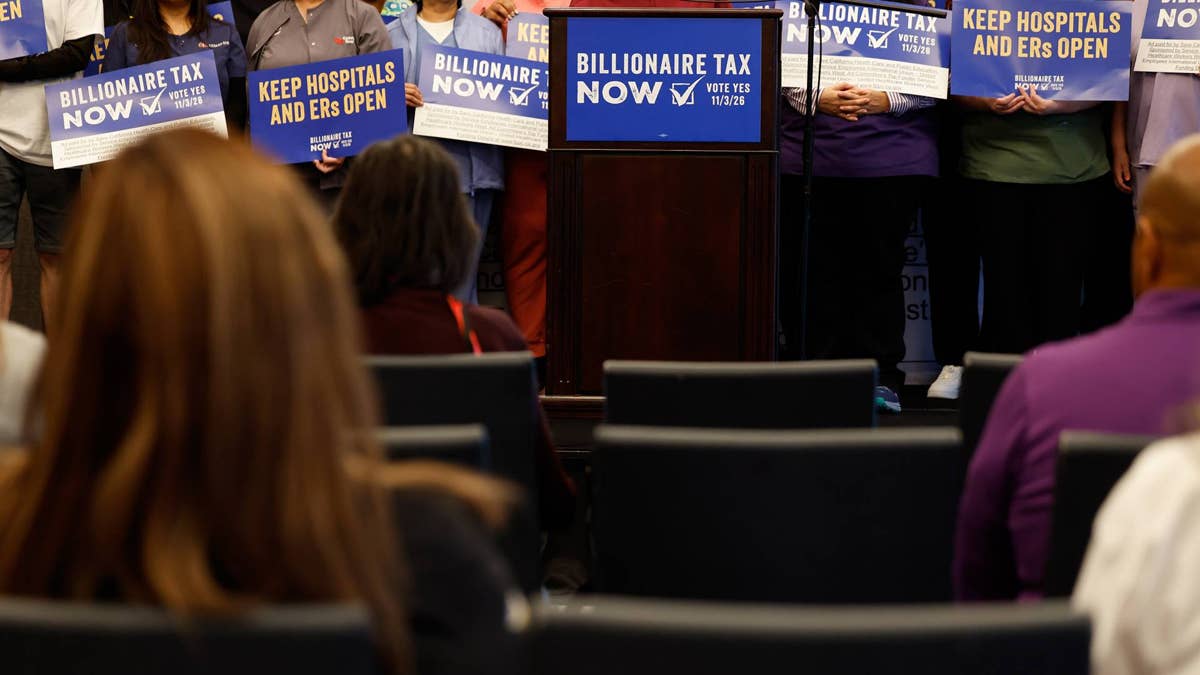
A tax proposal targeting roughly 200 Californians with the potential to raise an estimated $100 billion just cleared its biggest hurdle, according to CBS News.
Backers of the California Billionaire Tax Act submitted more than 1.5 million petition signatures to state election officials on April 28, roughly double the number needed to qualify for the November ballot.
A competing initiative called the Transparency Act is also collecting signatures, and its structure could neutralize the billionaire tax, even if voters approve it. If both measures land on the ballot and the Transparency Act gets more votes, it could block the wealth levy entirely, the Los Angeles Times reported.
A successful wealth tax in California would set a precedent that could reshape how state legislatures across the country approach taxing the ultra-wealthy. This comes as a parallel federal proposal from Sen. Bernie Sanders (I-Vt.) targets the same population on a much larger scale.
California’s billionaire tax targets assets, not income
The proposed levy would impose a one-time 5% tax on the net worth of billionaire residents as of Jan. 1, 2026, with the bill due in 2027. Taxpayers could spread payments across five annual installments, though a 7.5% additional fee would apply to the unpaid balance, Yahoo Finance reported.
Ultra-wealthy individuals can sustain lavish lifestyles without selling major holdings, thereby largely sidestepping income taxes, the left-leaning think tank Institute on Taxation and Economic Policy explained in its analysis, according to Yahoo Finance.
“We will get less housing, we will get less investment in machinery and equipment, we’ll get less investment in new companies…. That ultimately makes everyone worse off,” said Adam Michel, director of tax policy studies at the Cato Institute, in a Fox Business story.
The wealth tax would address that gap by taxing all accumulated assets, whether converted to realized income or not, the Institute on Taxation and Economic Policy noted, as Yahoo Finance explained.
Taxable assets would include businesses, securities, collectibles, and intellectual property, while real property and certain retirement accounts would be excluded. About 875,000 signatures must be validated by June 25 to secure a spot on the November ballot, Yahoo Finance reported.
Google co-founders have already left California over the proposal
The measure has already triggered the exact exodus opponents predicted. At least half a dozen high-profile billionaires relocated from California as the initiative gained traction last year, including Google co-founders Larry Page and Sergey Brin, according to Yahoo Finance.
The Hoover Institution, a conservative-leaning think tank based at Stanford University, estimated that California could actually lose up to $25 billion once forgone income tax revenue from departing billionaires is accounted for.
More Personal Finance:
- Fidelity has a warning for anyone who left a 401(k) at an old job
- Living trusts: what they do and who needs one
- Fidelity sounds alarm on 401(k)s, IRAs
The institution also projected that actual collections would fall far short of $100 billion, more likely generating closer to $40 billion, Yahoo Finance reported. The Tax Foundation, a right-leaning tax policy organization, projected that DoorDash co-founder Tony Xu would face a $4.17 billion liability that could render him bankrupt.
Nvidia CEO Jensen Huang would owe approximately $8 billion in taxes, according to the Tax Foundation. Huang has said he is “perfectly fine” with the proposed tax, telling Bloomberg in January that it had never crossed his mind.
“Move to California, don’t leave. It’s the highest taxes in the world, but it’s okay,” Huang later said at a Stanford Graduate School of Business event, according to Fortune.
A rival ballot measure could kill the billionaire tax, even if voters say yes
The Transparency Act represents a strategic countermove. Under California’s ballot rules, when two competing initiatives both pass, the one receiving more total votes takes effect.
If the Transparency Act outpolls the billionaire tax by even a single vote, it could override the entire wealth levy, the Los Angeles Times reported.
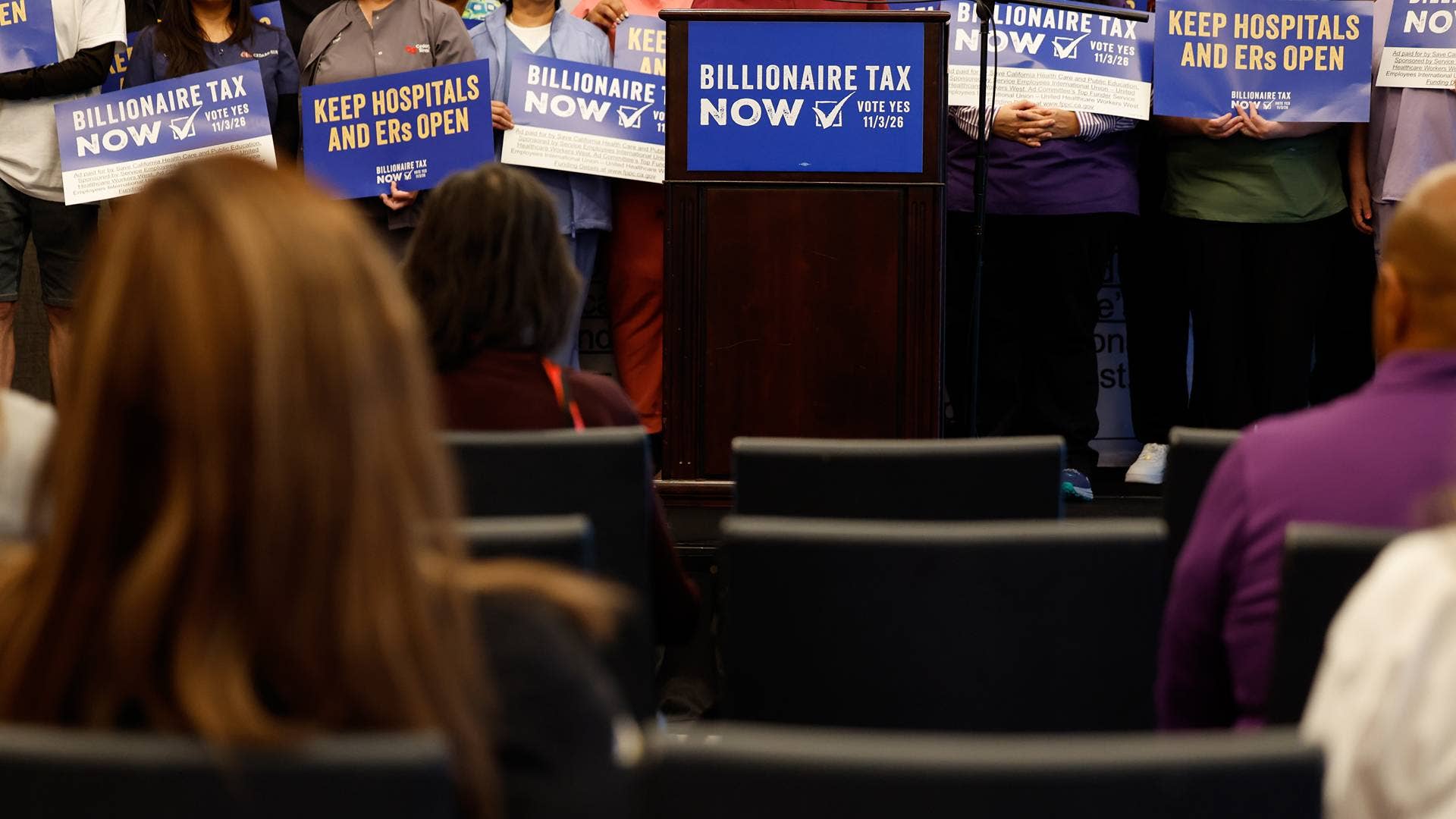
Supporters of the wealth tax, led by the Service Employees International Union-United Healthcare Workers West, launched the initiative as an emergency response to potential losses in health care funding.
The union estimates California will lose nearly $100 billion in federal health care funding over five years following passage of the One Big Beautiful Bill Act, Yahoo Finance reported.
Bloomberg/Getty Images
A federal wealth tax proposal makes California’s fight a national story
Sen. Sanders and California Democrat Rep. Ro Khanna introduced the Make Billionaires Pay Their Fair Share Act in March, proposing a 5% annual tax on roughly 938 billionaires nationwide. The federal version would raise an estimated $4.4 trillion over 10 years and distribute $3,000 to every person in households earning $150,000 or less in its first year, Yahoo Finance reported.
The key distinction is that California’s tax is a one-time levy, while the federal version would recur annually, compounding against billionaires’ holdings year after year.
For your long-term investment outlook, forced asset sales by billionaire founders under either proposal could depress stock prices in companies where concentrated ownership supports valuations, with the effects flowing through to index funds, 401(k)s, and IRAs held by millions of Americans.
A wealth tax battle that tests more than California
The California Billionaire Tax Act is no longer just a policy experiment; it has become a high-stakes test of how far states can go in taxing accumulated wealth rather than income.
With more than 1.5 million signatures submitted, the measure has already cleared a major procedural hurdle, but its outcome remains uncertain because of a competing Transparency Act.
The structure of the proposal, targeting assets rather than annual earnings, directly challenges how ultra-wealthy individuals preserve and grow capital, which is why it has triggered both political resistance and early relocation among high-profile billionaires.
Supporters point to an estimated $100 billion in potential revenue, while outside analyses suggest outcomes could land significantly lower once behavioral responses, such as relocation or asset restructuring, are factored in.
At the same time, legal and design concerns raised by policy groups highlight how implementation details could materially alter the tax’s effective burden.
Related: Billionaire fund manager drops $2.8 billion on Big Tech stocks
#California039s #billionaire #tax #ignites #100B #fight