
You can also listen to this podcast on iono.fm here.
JIMMY MOYAHA: The National Consumer Commission has teamed up with the South African Revenue Service, Sars, to tackle an issue that we have been keeping an eye on with the team at Sars for quite some time: the illicit goods market. There is a new initiative that is coming to fruition. We have plans around it directly aimed at tackling the illicit goods markets in South Africa.
We are going to be looking at this with the acting commissioner at the National Consumer Commission, Hardin Ratshisusu who joins me on the line now to see what we make of this.
Hardin, lovely having you on the show. Thanks so much for taking the time. Give us a sense of this initiative and the plans that the commission and Sars have put together here.
HARDIN RATSHISUSU: Good evening, Jimmy and the SAfm listeners. Indeed, you’re right. We as the National Consumer Commission and the South African Revenue Service signed a memorandum of understanding (MOU) … to enhance cooperation in our work.
There is a lot of work that we do currently with Sars, particularly with respect to clothing, textile, footwear and leather goods. So the MOU is to strengthen this collaboration, and we will be engaging with Sars further on this to outline the form of additional areas of cooperation that we embark upon.
Parallel to that, when the National Consumer Commission tabled its annual performance plan for this financial year, which was approved by Minister [of Trade, Industry and Competition] Parks Tau, we had already highlighted the need to tackle illicit goods. So you will see that this year we will be heightening that kind of cooperation and collaboration and the measures that we’ll be putting in place together with other regulators, including Sars.
ADVERTISEMENT
CONTINUE READING BELOW
JIMMY MOYAHA: Hardin, can we look at the objectives here? We know the damage that the illicit goods market has done in South Africa, and we can only imagine what it will continue to do if the issue is not addressed. But from an initiative perspective, the primary objectives here, are we looking to curb the market? Are we looking to monitor it or are we looking to get some insight on how those markets operate? What does phase one of this plan look like?
HARDIN RATSHISUSU: What we would like to do with Sars, as I’ve said, we are already working together. We want to enhance this cooperation. If you look at the Consumer Protection Act, it already provides for a lot of prohibitions around goods. Those goods sold in the country or manufactured must be labelled properly.
So that means that when Sars is monitoring goods at customs. We should be working with them beyond on clothing products that we’ve been looking at together.
JIMMY MOYAHA: Hardin, we got some comment from the Professor for Economics and the Director of the Research Unit at UCT, Professor Corné van Walbeek around this matter, and I want to play a clip from the professor and get your thoughts in response…
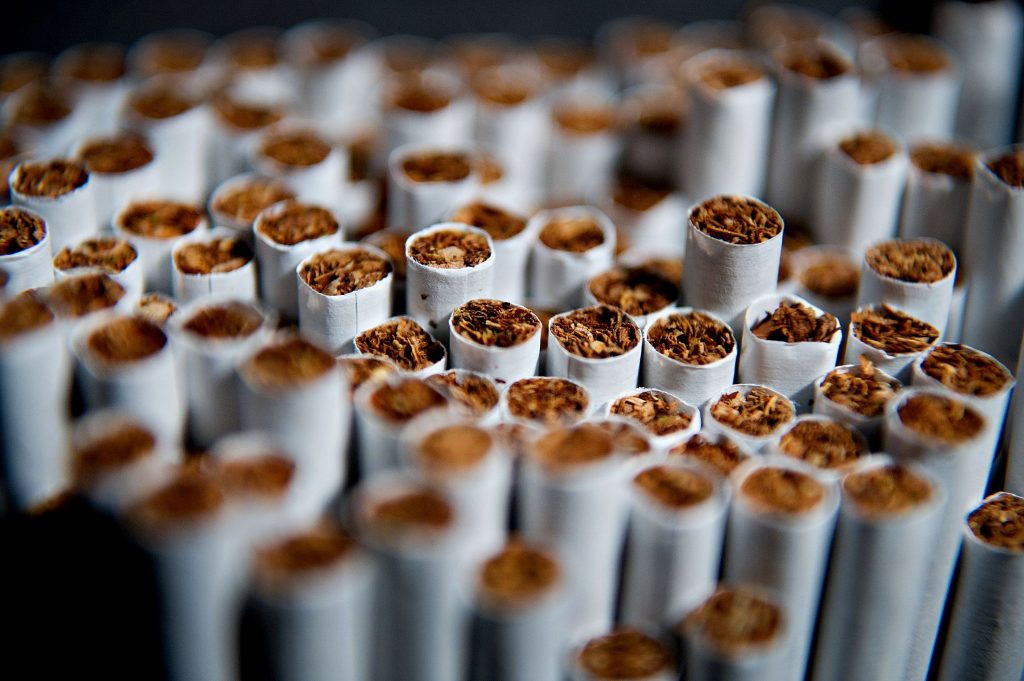
PROFESSOR CORNÉ VAN WALBEEK: We know that illicit trade in cigarettes is a criminal problem and a financial issue, and that is why it’s important that the revenue service is involved.
From our perspective, it’s a little peculiar that it’s the National Consumer Commission that is involved in rolling out this plan and getting the tenders going and so on for the simple reason that that doesn’t seem to be their prime focus. They are not necessarily focused on crimes, as in the kind of stuff that the police and the Hawks would be busy with. So from our perspective, it looks like an interesting and rather peculiar combination of two parties implementing this. However, we wish them all the best, and I really trust that something really positive will be able to come from this.
I think it’s important that the government really addresses the issue of illicit trading. Tobacco products is a public health problem; it’s a fiscal problem. The government literally loses something like R15 billion per year in terms of excise taxes on tobacco products.
The public health consequences are detrimental as well, in the sense that many people are consuming cigarettes [who] would otherwise not be consuming cigarettes if they were all sold at taxpayer prices. So this is very much a step in the right direction.
ADVERTISEMENT:
CONTINUE READING BELOW
JIMMY MOYAHA: Now, Hardin, you heard there that the professor was saying that the National Consumer Commission doesn’t typically deal with the sort of interventions that we’re seeing here. I’d like you to just give us a sense of the impact that this market or this illicit trade is having on consumers – and why the National Consumer Commission then felt that it was your responsibility to get involved because of the detrimental impact on consumers.
HARDIN RATSHISUSU: The impact on the economy is devastating. I think the numbers have been put out there. The impact on consumers is even worse.
I think we need to do a bit of explaining here – that there is a legal instrument….if you look at it, the Consumer Protection Act in Section 24 regulates trade description.
That means that from a consumer protection perspective we are talking about labelling – that suppliers must tell us where the products are produced, the ingredients and many other things. The reason we are doing this is because we do a lot of inspections and we are finding products that we cannot trace, and we don’t know where they are coming from.
Those products could even include cigarettes. That’s why we are proposing in our plan that, again through the Minister of Trade, Industry and Competition, there should be a regulation for track and trace from a consumer protection point of view.
I think [one should] understand that this intervention is not meant to substitute all other interventions. The professor is right; there are criminal elements to this that have to be addressed by other law enforcement authorities. But, from a consumer-protection point of view, there is a law. We have to ensure that we implement this law. And with the regulation when it goes out you will be able to see the value.
As I’ve said, we are already doing this for clothing, textile, footwear and leather products. There are products that are being destroyed right now through our interventions at the ports. They are being re-exported because they have not been properly labelled. So there is, I believe, maybe a lot of advocacy that we should do from the National Consumer Commission side to explain our role in the in the economy broadly.
JIMMY MOYAHA: Speaking of that role in the economy, before I let you go, Hardin, can we take a look at some of the…tools you are empowered with to address some of these inefficiencies and deficiencies?
ADVERTISEMENT:
CONTINUE READING BELOW
When the National Consumer Commission has come to the party to act on certain matters, it has historically been quite decisive and to the benefit of consumers. Can we just revisit that aspect of it, that once wrongdoings are found or once breaches are found that don’t align with the legislation, the commission is going to take action.
HARDIN RATSHISUSU: Indeed. I think you would have picked up that there are many other areas that we look at around terms and conditions. There were recent settlements with WeBuyCars and Cartrack. We are looking a lot in the area of product safety and there are product recalls that we institute in this regard – this is a very big area.
So when you talk track and trace, once you have the regulation you can invoke product recall powers if the products do not comply with the regulation. In our view this is a very, very powerful tool that has not been used or fully utilised and we should use it to tackle this problem. This is a contribution to us addressing the issue, but it’s not so much to say that the National Consumer Commission alone will address the problem.
But I think you would have seen in a whole lot of other areas, there are cases we are investigating now. We are finalising cases against FlySafair and you will see some action imminently on those kinds of matters.
So there is a lot that I believe we are doing to protect consumers in the country.
JIMMY MOYAHA: It does indeed take a coordinated effort to ensure that we see the right results, especially in markets like the counterfeit markets and the illicit trades that we are looking to crack down on.
We’ll leave the conversation on that note. Acting commissioner at the National Consumer Commission Hardin Ratshisusu joined us to take a look at the latest initiative between the NCC and the South African Revenue Service aimed at clamping down on illicit goods.
#Counterfeit #crackdown #introduces #product #verification #plan