
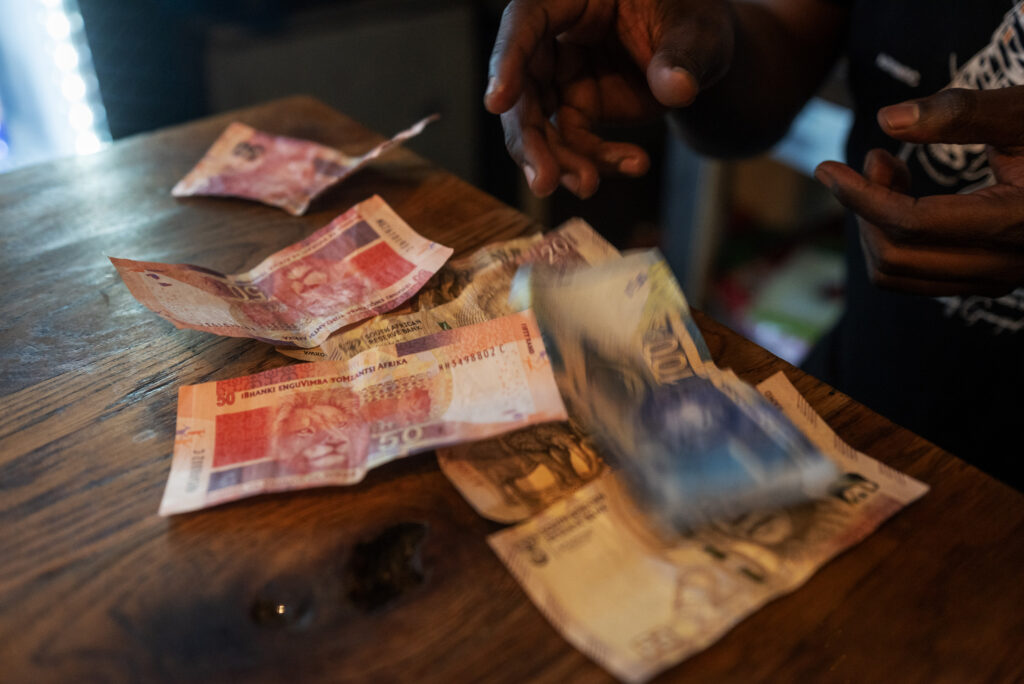
Access to cash from the newly implemented two-pot retirement system and successive interest rate cuts provided a critical financial safety valve for South African consumers in the first quarter of 2026.
However, data reveals this relief may be masking systemic cash-flow stress, as individuals increasingly deplete emergency savings while expanding their multi-lender borrowing habits.
Read: Sarb ties SA rate path to Iran war timeline
Marking 10 years of consumer tracking, the Q1 2026 DebtBusters Debt Index highlights that while the immediate rush for debt counselling was slightly muted due to the temporary financial cushions of rate cuts and retirement savings, underlying structural stress remains deeply entrenched.
Benay Sager, executive head of DebtBusters, notes: “We believe the financial relief of successive interest rate reductions and access to two-pot retirement savings have helped consumers with their finances.”
Read:
Pension fund ordered to pay two-pot withdrawal benefit
One year into the two-pot system: Lessons from the frontline
Yet, despite this dual liquidity injection, subscriptions for online debt management tools surged 23% year on year, signalling that everyday cashflow anxiety has far from evaporated.
Sager warns that this trend remains highly predictable: “What remains consistent is that debt burdens are elevated, and income growth is not keeping pace with rising costs.”
The low-income paradox vs high-earner crisis
ADVERTISEMENT
CONTINUE READING BELOW
The index exposes an economic paradox playing out across different income brackets under the two-pot environment. On average, consumers applying for debt counselling required 64% of their net take-home pay to service debt obligations. While this is a marked downward trend from the 73% peak recorded in Q1 2021, the headline improvement is split heavily by income level.
Lower-income earners (those making under R10 000 per month) have actually seen their total debt footprint contract by up to 25% since 2021. However, DebtBusters clarifies that this represents a tightening of credit parameters rather than genuine wealth creation.
Read: When does ‘good debt’ turn bad?
In stark contrast, South Africa’s highest earners are experiencing acute financial stress. Individuals taking home more than R50 000 a month are starting every single month on the back foot, requiring an astonishing 101% of their net salary just to clear their monthly debt commitments. This cohort carries a total debt-to-annual-income ratio of 303% – the highest of any income band.
For these top earners, unsecured debt levels have ballooned by 99% since 2021, effectively doubling. This accumulation far outpaces the 27% average inflation rate and their modest 6% salary growth over the same period, pinpointing a massive risk centre for financial institutions.
Record reliance on payday and personal loans
To survive month to month, consumers are relying on short-term, unsecured financing to bridge the gap. A record 96% of new applicants already hold a personal loan at the time of seeking debt help, while 61% are actively juggling a one-month payday loan, another all-time high.
Read: The payday trap that could cost you your bond
Compounding this problem is the return of multi-lender borrowing. The average number of active credit agreements per applicant climbed back to 8.5, rebounding from a low of 7.1 in 2023 to reach its highest level since 2017.
Furthermore, the banking sector has altered its lending profile, concentrating its exposure by granting larger individual loans to a much smaller pool of high-income clients. Since 2016, the average unsecured loan size has increased by 66%, even as the total volume of individual unsecured loans granted fell by 20%.
ADVERTISEMENT:
CONTINUE READING BELOW
Middle-class budgets under strain
For South Africa’s economic backbone, the R10 000 to R20 000 income group, everyday operational survival leaves no room for error. This segment is feeling the extreme pinch of vehicle asset debt.
Once debt obligations are cleared, almost one-third of their remaining disposable income goes strictly to food, leaving virtually nothing behind for life insurance, discretionary savings, or medical emergencies.
Listen/read: Financial stress deepens as the middle class faces mounting money strain
Across almost all applicant profiles, regardless of income, structural costs remain heavily rigid, with roughly 10% of disposable income spent on transport, 9% on utilities, and 4% on cellphone charges.
A new generation confronts debt early
The report highlights that financial distress is shifting into early-career age groups. South Africans born after 2000 now make up 9% of all new applicants, proving that debt pressures are impacting young adults far earlier in their careers than in historical cycles.
Despite these macro warning signs, the long-term data validates that the structured debt relief mechanism is operating efficiently. The number of graduates completing debt counselling in Q1 2026 is 14 times higher than in 2016. These debt-free graduates collectively repaid R560 million to their respective creditors during their rehabilitation programmes, proving that when the short-term relief of the two-pot system withdrawals runs dry, structural intervention remains highly successful.
#Rate #cuts #twopot #relief #fail #stop #SAs #debt #spiral