
You can also listen to this podcast on iono.fm here.
JEREMY MAGGS: South Africa has just recorded its strongest new car sales in more than a decade, with over 422 000 passenger vehicles sold last year. All well and good. But beneath that headline recovery, the market, I think, appears to be shifting in important ways. Buyers are becoming a lot more price-sensitive.
Chinese manufacturers, and we’ve reported on this in full in the past, are rapidly gaining market share. Younger consumers, interestingly, are also driving demand, while premium buyers may be pulling back a little.
I think the important question is whether this is a genuine recovery for the motor industry or simply a structural reset around affordability.
Let’s bring into the conversation Ayesha Hatea, who’s senior director of research and consulting at TransUnion Africa.
Welcome, Ayesha, thank you very much indeed. So that headline number looks strong, but how much of this is real recovery and how much is simply pent-up demand after the years of pandemic?
AYESHA HATEA: I do think it’s a little bit of both. We do see that pent-up demand. We’re talking about record-high sales in quarter four with over 114 000, it was the highest quarterly volume we saw since 2014.
Listen/read: Motus rides SA vehicle boom as margins surge
So that is a massive recovery from a sales perspective, and from a (1:22 ….. ) perspective, we did see quite low volumes post-Covid, it took very long for us to recover. So 2025 has been the first year where we’re actually seeing that rebound in sales.
JEREMY MAGGS: You argue, and this makes perfect sense, that affordability is now the biggest driver of sales. But are you able to push that out a little for me? What exactly is changing in how South Africans calculate whether they can afford a new car or not?
AYESHA HATEA: There are a couple of factors that play into what consumers are buying and in what sectors they’re buying.
ADVERTISEMENT
CONTINUE READING BELOW
If we’re looking at some of the other figures that come through, there has been a shift between the demand for new cars versus used cars. So that ratio that we normally calculate in terms of used versus new, that has declined.
Read:
The stunning rise of Chinese SUVs in South Africa
Strength of the rand is ‘good news’ for new vehicle prices
Chinese vehicle manufacturer now number three in SA
More people are actually buying new cars over used cars and that’s where there is new interest, and the Chinese markets play that role, because where consumers previously were buying second-hand cars because of the affordability, they’re looking at paying a little bit extra and getting a new car, and with that new car comes a service plan, it comes with a warranty.
So it does give consumers that additional peace of mind when making those purchases. So along with that affordability, they’re also considering those additional costs that might arise between choosing a used versus a new car.
JEREMY MAGGS: That’s very interesting, that narrowing gap between new and used cars. So we prefer new vehicles, is what I’m hearing you say, simply because financing is making them look more affordable on a monthly basis. But is that accurate?
AYESHA HATEA: What consumers are also doing, there are a lot of things that we need to consider again, from a consumer perspective, when they’re choosing the new car, the new car might be slightly more expensive.
Again, they’re making considerations around that total cost when it comes to servicing and warranties.
What they might not be fully considering is the financing cost that comes along with that. What we see happening is there’s an extension of loans. So consumers are taking loans over longer periods. They’re also taking bigger balloon payments, which then also affects their total cost of ownership.
Read:
SA weighs steep tariffs on vehicles from China, India
The dtic considers ad valorem tax changes to lower car prices
That might be something that consumers do need to pay a little bit more attention to because ultimately, they’re looking at their wallet in the short term.
So yes, we’re saving on servicing costs. Yes, we get a warranty. Yes, my instalment might be lower because I’ve extended those terms, but ultimately that total cost over the lifecycle of the vehicle will increase.
JEREMY MAGGS: And it’s that balloon payment often at the end of the cycle that can, to extend the metaphor, really burst the bubble, right?
ADVERTISEMENT:
CONTINUE READING BELOW
AYESHA HATEA: Correct. Because a lot of consumers at that point then have to rely on the residual value of the vehicle, or they have to be able to refinance those balloon payments at the end of term.
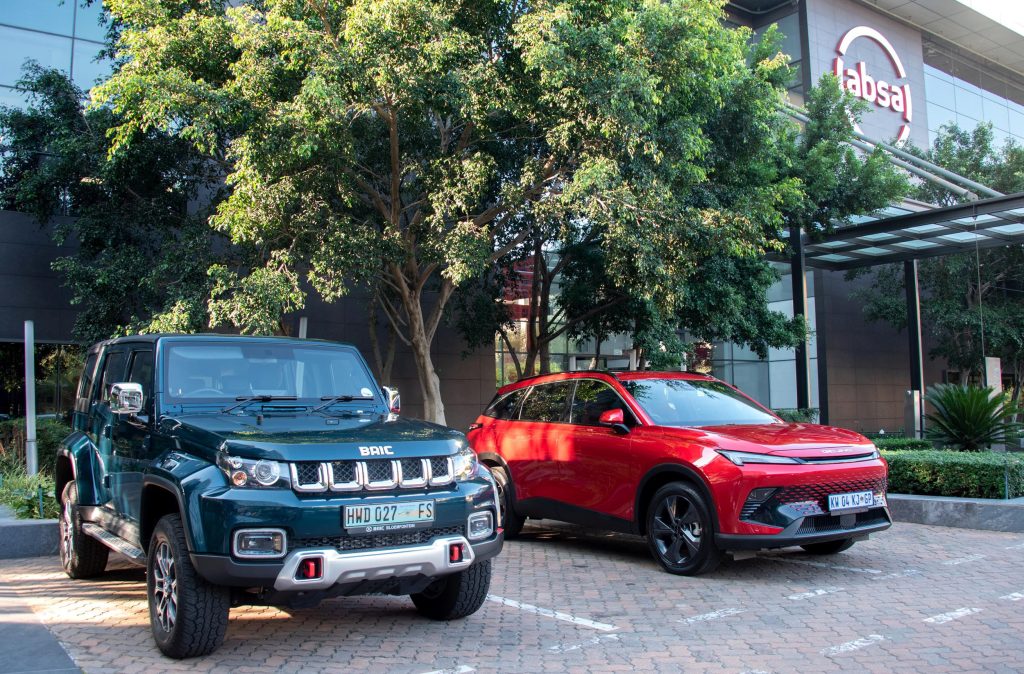
JEREMY MAGGS: I want to talk about the Chinese brands. If I read your survey correctly, more than 17% of new vehicle sales, that’s pretty impressive. Is it simply about price, or do you think consumers are starting to trust these brands in ways that they maybe didn’t, three or four years ago?
AYESHA HATEA: We are seeing that structural shift towards affordability-driven buying. They do come in with quite aggressive pricing. They have enhanced specification, extended warranties, and they are building that trust within consumers.
Ultimately, consumers are weighing up the options in terms of, if they have to choose alternate brands, what does that mean from an affordability perspective and what are they getting?
So what are those bells and whistles that they’re getting, and we’re seeing that many of these Chinese manufacturers offer them too.
JEREMY MAGGS: What do you think that means for traditional brands that South Africans like, for instance, Toyota, Volkswagen, Ford, if Chinese manufacturers, as your number suggests, are growing nine times faster than the market.
AYESHA HATEA: I think there is a place for them. I think they do have brand loyalty with. We’re seeing that specifically with the upper-end millennials, as well as the Gen X’s. But also, they do offer certain buying incentives that they build into their current campaigns.
If you look at our current volumes right now, they still hold the top five volumes within the sales numbers that we’re seeing currently. They do definitely still have quite strong demand and they are still pushing very strong volumes.
I think what we’re seeing coming from the Chinese brands is perhaps a new market of consumers.
To your earlier point, who had that pent-up demand, who weren’t quite ready to enter the market.
But the market for our traditional brands is still there. We are seeing their growth. As I said, if you look at the top 10, our top five is made up of those traditional brands.
ADVERTISEMENT:
CONTINUE READING BELOW
JEREMY MAGGS: Interesting to draw that comparison though, between Gen X, Gen Z and millennials and then perhaps older higher income buyers. Demand among that cohort seems to be cooling. Is that a sign maybe that the premium market is reaching saturation?
AYESHA HATEA: I wouldn’t say saturation, but we can see that it’s starting to normalise as the demand is shifting back towards those younger affordability conscious consumers.
Read: A start-up that wants luxury cars to earn their keep
Luxury brands like BMW are still doing really well in terms of getting into that premium-led demand that still exists in the market.
JEREMY MAGGS: Let me put this to you, though, and it’s against the backdrop of what’s happening in the Middle East. Vehicle affordability ultimately depends on interest rates and obviously fuel prices. Oil again spiking above $100 a barrel as we have this conversation.
Ayesha, let me suggest to you that the recovery that we’ve been talking about is very vulnerable if either of those move sharply again.
AYESHA HATEA: Correct. I think that’s what we’re all keeping our eye on. Even after our finance minister (Enoch Godongwana) did the budget speech and the very next day, he had to go back and say, yes, it was good and we were all happy. We’re trying to figure out what that means for all of us, but that continuously changes.
Read:
SA new vehicle sales hit decade high as affordability drives demand
Tata re-enters SA passenger car market after six year absence
Nissan will stay in SA and invest in Navara – local MD
So we have to keep our finger on the pulse. We have to understand what those moving parts are and the impact that it’s going to have.
So even as we’re purchasing these vehicles, we’re thinking short-term affordability, but we also need to consider: can I afford the car if the interest rate goes up? Can I afford the car if the petrol goes up?
What kind of buffers do I have in place in my wallet and in my pocket to help prevent that shock that might come.
JEREMY MAGGS: Well, keeping her finger on the pulse for us, that’s Ayesha Hatea, who’s senior director of research and consulting at TransUnion Africa.
#Chinese #brands #gain #ground #affordability #drives #strongest #car #sales #decade