
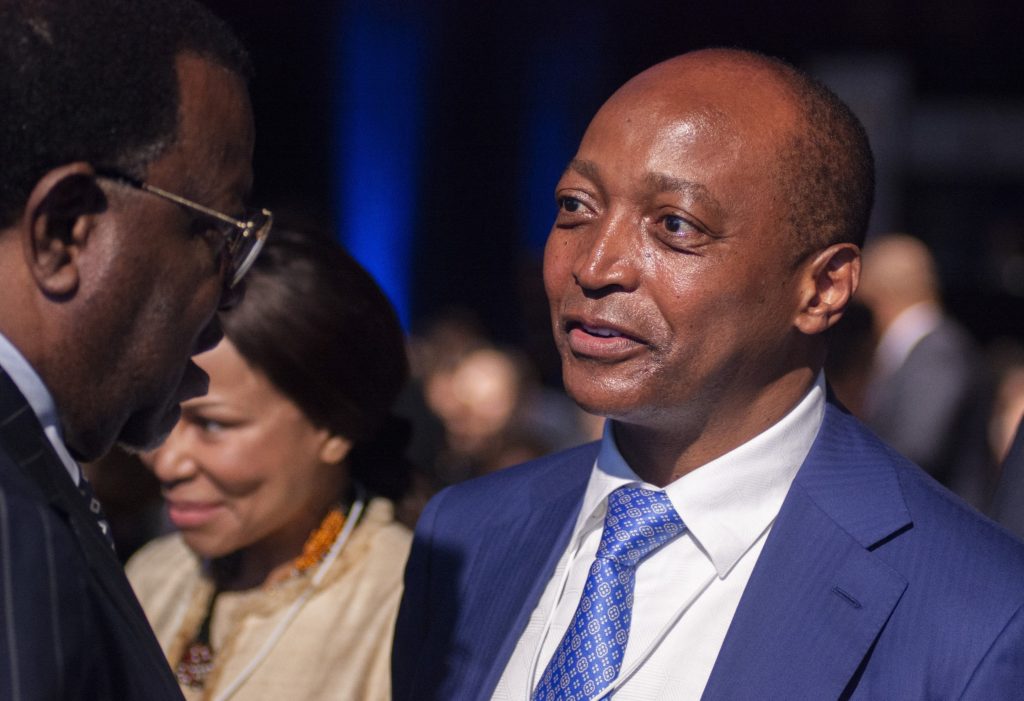
South African billionaire Patrice Motsepe has been lauded for cleaning up the finances of Africa’s most powerful sports organisation, but a football trophy scandal has highlighted the deep mistrust that still dogs the body.
The Confederation of African Football (Caf) stripped Senegal of its Africa Cup of Nations title, handing the trophy to host Morocco two months after the 18 January final, a dramatic twist that’s reignited questions about CAF’s credibility.
Read:
Fifa optimistic amid chaos
African soccer body fines Senegal, Morocco after chaotic final
“Capital is important but what drives investment is trust and integrity,” said Beverley Agbakoba-Onyejianya, a Lagos-based sports attorney and arbitrator. “That’s what you take to the bank.”
The ruling lands at a delicate moment for African football. CAF has just recorded its first profit in years, attracting a record 23 sponsors to the Morocco tournament under Motsepe’s watch. But if governing bodies can’t be trusted to uphold results on the pitch, that commercial progress risks being undermined by lingering trust issues.
At the heart of the controversy was a walkoff by Senegal’s coach and players after officials disallowed a goal and awarded Morocco a penalty.
When play resumed, midfielder Pape Gueye scored the match’s only goal. CAF’s appeal board ruled this week that the walkoff constituted a forfeit under its rules and gave Morocco a 3-0 win.
“It undermines the good work that CAF has done over many, many years to ensure that there’s integrity, that there’s respect, that there’s ethics, that there’s governance, as well as credibility of the results of our football matches,” Motsepe said in a video statement posted on X.
It “exposes the work that we are still dealing with concerning the suspicion and distrust. It’s a legacy issue.”
Senegal’s government called for an independent probe “into suspicions of corruption within CAF leadership,” in a striking response to the ruling.
“You cannot let a match be played to the end on the pitch and then overturn it two months later,” said Abdoulaye Fall, president of the Senegalese Football Federation, which will appeal to the Court of Arbitration for Sport in Lausanne, the de facto supreme court for sports disputes.
Morocco invested more than $1 billion upgrading and building stadiums for the month-long event, and is preparing to co-host the 2030 Fifa World Cup with Spain and Portugal.
TotalEnergies SE was title sponsor for what CAF called its biggest commercial success since its founding in 1957, with the number of sponsors tripling to 23 from the 2021 Cameroon edition.
The organisation reported a net profit of $9.5 million in the 2023-24 financial year compared with a loss of $9.2 million the year before, according to a statement.
Read: Standard Bank backs Bafana Bafana ahead of World Cup
“Afcon is a major event, but its financial success is limited once you consider the full picture,” said Gerard Akindes, an adjunct faculty at New York University. “Host countries spend huge sums, often covered by taxpayers, and these costs are largely ignored when we focus only on revenue.”
The Moroccan Football Federation, which filed the successful appeal, welcomed the ruling, saying it only sought to ensure the tournament’s rules were respected.
But the decision falls in a grey area, Agbakoba-Onyejianya said, because under Law 5 of International Football Association Board rules, the referee is vested with powers to make decisions on the field of play.
In this case, that decision was to allow the game to continue.
Motsepe took over in March 2021 pledging to clean up a body marred by scandal under predecessors. The South African tycoon has acknowledged the credibility gap as one he is still working to close.
The crisis presents an opportunity for reforms, said Agbakoba-Onyejianya.
“We need to turn this around so that we don’t become the laughing stock of the global football community.”
© 2026 Bloomberg
#African #football #row #tests #tycoon #Patrice #Motsepes #ability #restore #trust