
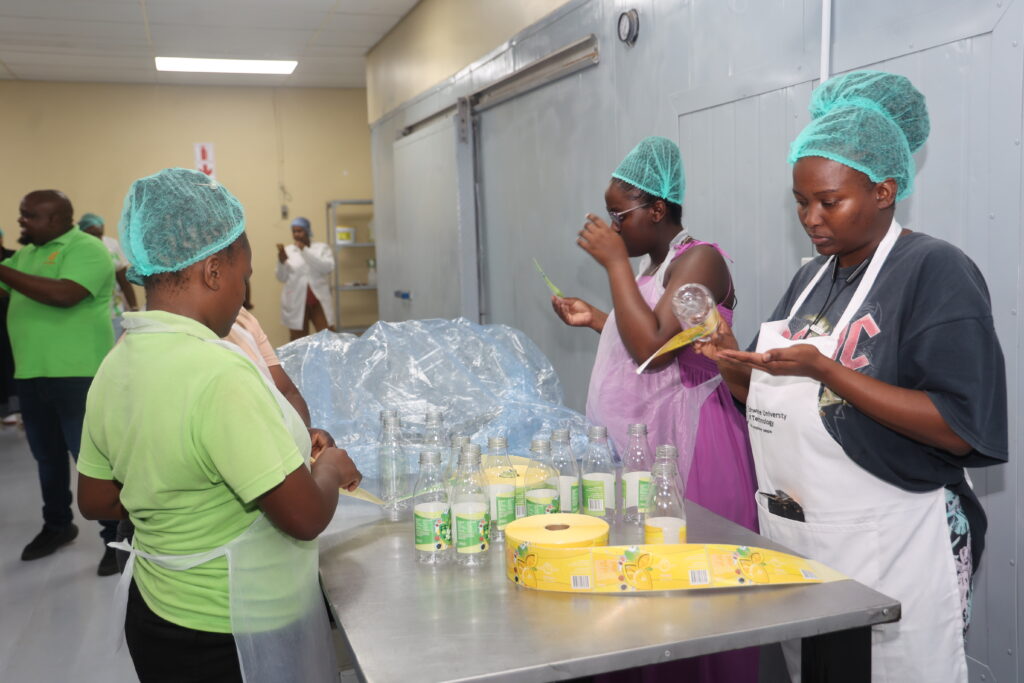
Agro-processing is where soil meets strategy.
It is the space where raw agricultural produce is transformed into finished, market-ready goods; where fruit becomes bottled juice, grain becomes packaged food, and primary production evolves into industrial opportunity.
Globally, the sector is recognised as a cornerstone of industrialisation and rural development. In Gauteng, it is fast becoming a powerful engine of inclusive economic growth.
At a time when small enterprises face mounting pressures, from infrastructure constraints and compliance hurdles to limited access to finance, the Gauteng Department of Economic Development (GDED) has placed agro-processing firmly at the centre of its high-impact delivery model.
Through its Sector and Industry Development unit, the department has launched a targeted Agro-Processing Programme designed not simply to support businesses, but to build competitive, certified and scalable enterprises.
This intervention forms part of the Department’s High Impact Partnership Delivery Model (HIPDM), a structured implementation framework that brings together government, industry partners and specialised implementing agencies to accelerate sector growth.
The model prioritises measurable outcomes, shared accountability and targeted investment in high-potential industries.
Rather than offering once-off support, it ensures coordinated end-to-end assistance that moves enterprises from informal survivalist operations to formalised, competitive businesses capable of driving industrial expansion and inclusive economic development.
The results already tell a compelling story
Since its launch, the programme has onboarded and supported 66 micro, small and medium enterprises (MSMEs) through tailored interventions that address both structural barriers and growth opportunities.
Twenty-four entrepreneurs have completed entrepreneurship and business management training, while 14 enterprises strengthened their financial management capabilities.
In a sector where compliance is often the difference between stagnation and scale, 42 beneficiaries completed Food Safety Management Systems training, positioning them to meet stringent local and international standards.
Collectively, participating businesses have generated R6 million in turnover, a figure that reflects not only revenue, but resilience and renewed market confidence.
Unlocking real industrial growth
“Agro-processing is not just about adding value to agricultural produce, it is about adding value to communities, creating sustainable jobs and building globally competitive enterprises,” says Goitsione Motloung, Gauteng’s chief director for Sector and Industry Development.
“The measurable progress we are seeing, from certifications to increased turnover, demonstrates that structured, strategic support unlocks real industrial growth.”
For many entrepreneurs, compliance certification is the gateway to opportunity.
One beneficiary, Local to Global Foods, secured a food compliance certificate from SGS. This significant milestone validates its products against international food safety benchmarks and opens doors to major retailers and export markets.
In a competitive global food economy, that certification is more than a document – it is market access.
Yet the programme’s true impact is best understood through the journeys of its beneficiaries.
Soshanguve success story
In 2016, Sibusiso Vilakazi began producing juice in his mother’s kitchen in Soshanguve. What started as a small township venture has evolved into Pure Value – a juice manufacturing company operating at the Tshwane Fresh Produce Market, one of the region’s busiest trading hubs.
Today, Pure Value supplies institutional clients nationwide through a contract with the Purchasing Consortium Southern Africa (Purco SA), which serves public universities, TVET colleges, allied institutions, and private higher education establishments.
The market opportunity is immense.
The Tshwane Fresh Produce Market alone represents a R3 billion industry. Demand for Pure Value’s products from universities, caterers, outsourced service providers and corporate clients continues to grow.
“What started as a passion project in my mother’s kitchen has grown into a fully operational manufacturing business,” says Vilakazi.
“The department’s support in compliance, certification and financial management gave us the foundation to formalise and compete. Our challenge now is scaling production to meet the demand that already exists.”
Vilakazi estimates that with upgraded machinery and adequate working capital, Pure Value could increase output by up to 2 000% in the next financial year – a projection grounded in confirmed demand rather than speculation.
The implications extend beyond revenue; scaling will create jobs for youth in Soshanguve and strengthen local supply chains.
Global ambition
Another beneficiary, Muofhe Ratshikombo of Oumies Grandé, illustrates the programme’s global ambition.
Through a bursary facilitated by the FoodBev Seta (Sector Education and Training Authority) and Duke University, Ratshikombo participated in an international immersion visit to Kenya, gaining exposure to global markets and industry best practices.
“The experience demonstrated that township-based enterprises are not confined to local markets,” says Ratshikombo.
“With the right standards, networks and support, we can compete globally.”
Translating policy into impact
Implementation has been driven through partnerships with four dedicated organisations that work closely with enterprises to ensure that support translates into measurable outcomes.
Nkwele Agribusiness is one of the four implementing partners that has been appointed. Managing director Thati Tladi says the company has worked closely with the department “to translate policy into practical impact”.
“Through targeted training in food safety management and entrepreneurship, structured mentorship, and market access initiatives across Soweto, Soshanguve, Hammanskraal and Mabopane, we have not only strengthened MSME compliance and competitiveness, but also contributed directly to business growth and the creation of 22 new jobs,” he says.
“This partnership demonstrates how collaborative leadership and shared accountability can accelerate inclusive economic development in Gauteng.”
Addressing barriers, easing constraints
Despite the progress, structural constraints remain.
Many small manufacturers continue to rely on manual processes that limit efficiency and output.
Access to modern processing technology and working capital will be critical in enabling enterprises to meet bulk orders, reduce production bottlenecks and compete at scale.
Yet what Gauteng’s Agro-Processing Programme demonstrates is clear – when systemic barriers are addressed, small enterprises do not merely survive, they formalise, expand and create value across the entire economic chain.
For investors, retailers, buyers, and policymakers alike, the message is unmistakable: agro-processing in Gauteng is not only growing but also transforming.
Brought to you by the Gauteng Department of Economic Development.
Moneyweb does not endorse any product or services being advertised in sponsored article on our platform.
#Gauteng #Economic #Development #boosts #agroprocessing #MSMEs