
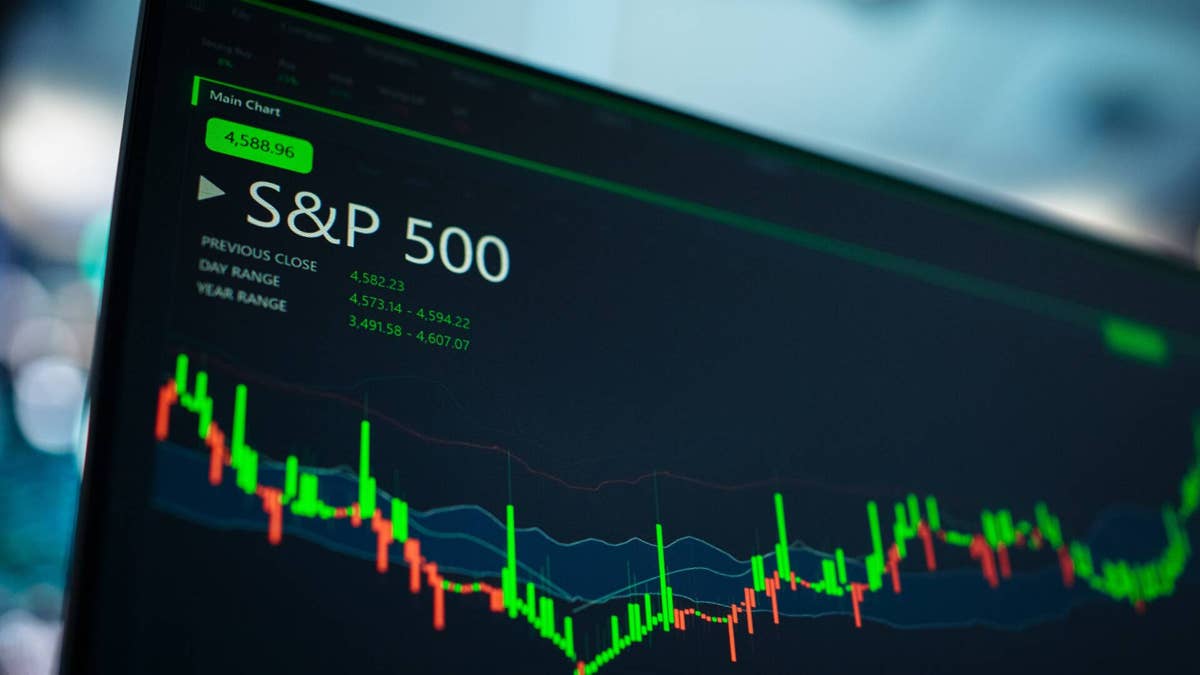
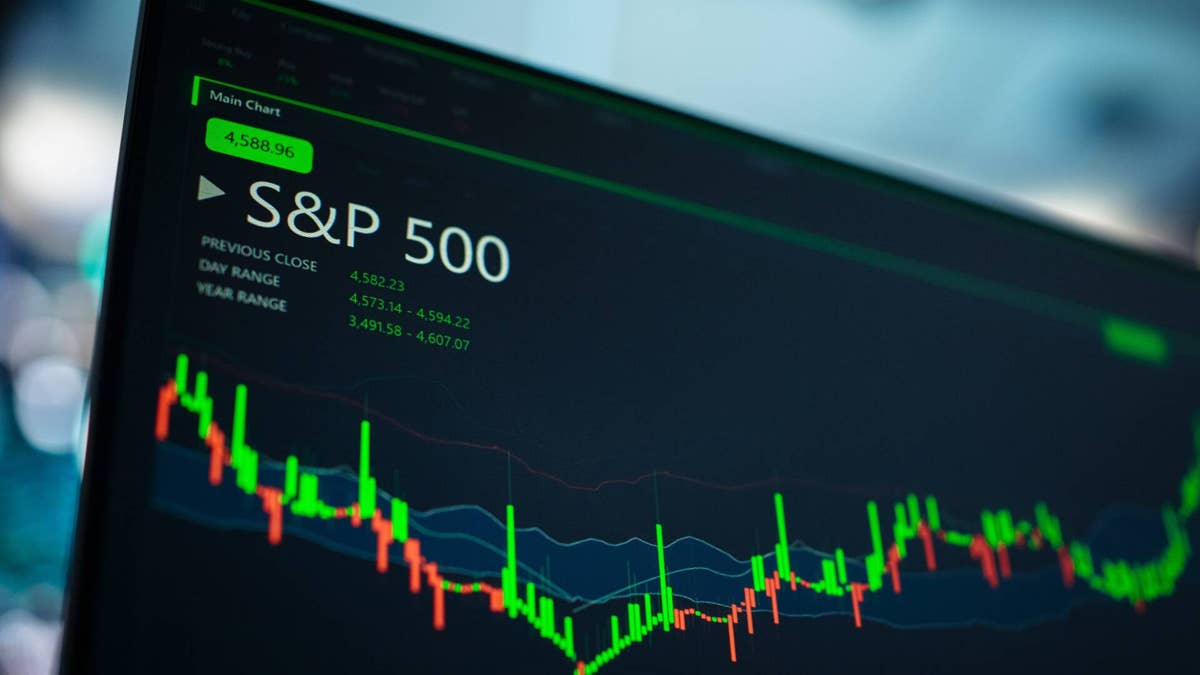
A few weeks ago, one of Wall Street’s most closely watched banks turned cautious on U.S. stocks. It cited rising geopolitical risks and dialed back its expectations for where the market would land by year-end.
Now it is reversing course, and the catalyst behind the shift is something most investors were not expecting to move the needle this fast.
Strategist Dubravko Lakos-Bujas raised JPMorgan’s year-end S&P 500 target to 7,600 from 7,200 on April 21. That implies roughly 7% upside from the index’s April 20 close of 7,109, and the reasoning behind the move is worth unpacking.
The prior 7,200 target had been set last month amid elevated geopolitical risks tied to the Middle East conflict. That concern has since eased enough to support a more constructive view, according to Investing.com. But geopolitics is only part of the story.
What changed in the S&P 500 earnings math
The earnings picture is doing most of the heavy lifting.
JPMorgan raised its 2026 S&P 500 earnings-per-share estimate to $330 from $315, representing 22% year-over-year growth. The bank also lifted its 2027 EPS forecast to $385 from $355.
More Wall Street
- Billionaire Dalio sends 2-words on Fed pick Warsh
- Top analyst bets these stocks will boost your portfolio in 2026
- Bank of America sends quiet warning to stock market investors
Both figures sit above the current Wall Street consensus, Investing.com reported. Critically, JPMorgan held its forward price-to-earnings multiple steady at 22x.
That last detail matters. The entire upgrade was driven by stronger earnings expectations, not by investors being asked to pay a richer multiple for the same profits. It is a cleaner, more defensible call than one built on valuation expansion alone.
The AI factor behind the S&P 500 rally
One catalyst stands out in the bank’s note. JPMorgan named Anthropic’s Claude Mythos model as a key driver of the recent market rally.
“The emergence of Anthropic’s Mythos has helped reignite the bullish AI trade after a shaky start to the year,” the bank’s strategists wrote.
The numbers back that up. Since April 7, 66% of S&P 500 AI-related stocks have outperformed the broader index, CoinCentral confirmed.
How major AI stocks have moved since April 7:
- Nvidia fell more than 6% between Feb. 27 and March 30, but has since soared 22%, according to CNBC.
- Alphabet, Amazon, and Meta Platforms are each up more than 20% over the same period, CNBC reported.
JPMorgan also expects Mythos to shift how investors think about AI capital spending. The bank said “capex should be viewed with less skepticism going forward,” noting that AI capex, as Investing.com indicates, is forecast to rise 58% year-on-year to $775 billion by year-end 2026.
Analyst consensus projects last-12-month capex to reach roughly $800 billion by the end of Q1 2027, Investing.com noted.
Shutterstock
The path to 8,000
JPMorgan is not treating 7,600 as the ceiling. If geopolitical tensions resolve quickly, the bank says the forward multiple could expand to 23x. That scenario “would imply an S&P 500 level of ~8,000,” strategists wrote, according to Investing.com.
That is not the base case, but it is now firmly on the table. It depends on calmer geopolitics, sustained AI enthusiasm, and earnings that continue to beat expectations.
The new 7,600 target also sits just below the 7,654 average from Wall Street strategists polled in the 2026 Market Strategist Survey, CNBC noted. JPMorgan is back in the consensus camp, not ahead of it.
What JPMorgan is still watching for the S&P 500
The upgrade comes with caution attached. The bank’s 10-day RSI has exceeded the 95th percentile following the sharp rally from recent lows.
JPMorgan flagged a “meaningful risk that the market enters a short-term consolidation phase before resuming its upward trajectory,” according to Investing.com.
Oil prices are still hovering around $90 per barrel. The geopolitical backdrop, while improved, remains in flux. And although a U.S.-Iran ceasefire has helped sentiment, the situation is not fully resolved, Investing.com noted.
Key figures from JPMorgan’s updated S&P 500 outlook:
- New year-end S&P 500 target: 7,600, raised from 7,200, according to CNBC
- Implied upside from April 20 close of 7,109: approximately 7%, CNBC noted
- 2026 S&P 500 EPS estimate: $330, raised from $315, representing 22% year-on-year growth, Investing.com reported
- 2027 S&P 500 EPS estimate: $385, raised from $355, Investing.com reported
- Forward P/E multiple: 22x, unchanged, Investing.com noted
- Bull case target: approximately 8,000, based on 23x multiple, CoinCentral noted
- AI stocks outperforming since April 7: 66%, CoinCentral confirmed
- AI capex forecast for year-end 2026: $775 billion, up 58% year-on-year, Investing.com reported
- Wall Street consensus year-end target: 7,654, CNBC reported
What investors should take from JPMorgan’s S&P 500 forecast
JPMorgan’s reversal matters because of its size and speed. The bank cut its target to 7,200 just weeks ago, citing geopolitical risk. Now it is back to 7,600, with stronger earnings and AI momentum doing the work.
The core message is straightforward. A 22x multiple held steady while EPS estimates moved up is a cleaner, more credible upgrade than one driven by valuation expansion alone.
JPMorgan is no longer defensive on equities. But it is not calling for a straight line higher, either. Consolidation is likely. Geopolitics remain a wildcard. And the path to 8,000 still requires a lot to go right.
Related: Morgan Stanley has a blunt message on S&P 500
#JPMorgan #resets #SampP #price #target #rest